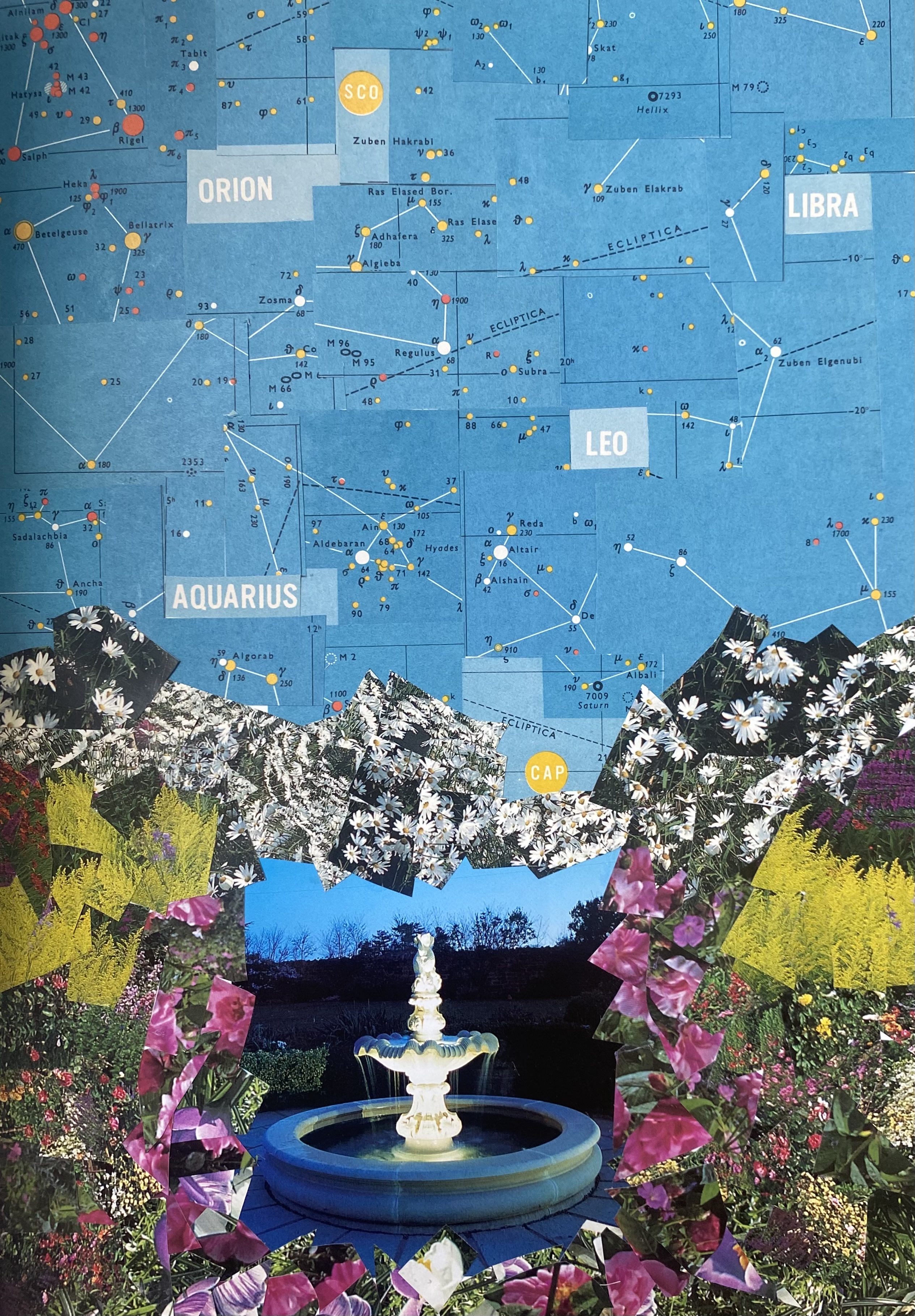
Sometimes, if you look down into the mirky waters of a fountain you will see a carpet of coins. People throw them in and make a wish. So far, not a single coin has been thrown into a new fountain that has been installed in Thornhill Gardens in Barnsbury, London – and I’ve got time on my hands, so I’ve been checking.
I’ve been wondering if I should be the first – and if I am the first – will being so lend my wish any more credence with the wish-answering gods? To be honest, I’ve been wondering if people still throw coins into fountains at all anymore. I’ve been wondering if all the fountains of England are running dry of wishes and if this is one of the forgotten repercussions of our cashless society. Should there be studies done? Is this yet another example of technology inducing in people a kind of spiritual and emotional malaise? Maybe I’m over thinking? Like I said, I’ve got time on my hands.
London is always changing they say, but to me, great swathes of the city seem to stay exactly the same. This can be said of my own slice of London – Barnsbury – which sits sandwiched between Upper Street in Islington and the Caledonian Road.
In Barnsbury, squares of regal Georgian three-tiered houses are protected by listings and council bureaucracy, which act to keep everything just so. Every now and again though something new does punch through and recently the people of Barnsbury have been entranced by the installation of their new fountain.
The fountain itself is naturally traditional in style and is a nod to the past, inspired by maps from the 1800s which showed a fountain installed in the exact same spot where the new one now sits. Somewhere amid the great sweep of time since the 1800s the original Barnsbury fountain was lost. Nobody knows what happened to it. I like to think it decided to move to a more fashionable part of town so uprooted itself and walked to Hampstead.
The great fountain restoration of 2023 was organised and funded by residents who are not short of a few quid to throw at intrepid – possibly eccentric – local projects.
In preparation for describing the fountain – and because I have time on my hands – I did take a few moments to Google the term in an attempt to find out the names for the individual composite parts that make one up. I thought that there would perhaps be some romantically Georgian-sounding names that had fallen out of use.
Sadly, I was disappointed. It seems that the base of a fountain – the little man-made lake on the bottom – is simply known as the basin, which was to be expected and in our case is circular and made of reconstituted stone. Above this, on a pedestal, sit two tiers, two smaller bowls that are topped by a spout from which water cascades down into the basin forming small translucent bubbles on the surface of the water that float around like green marbles before popping at the edges.
The garden in which the new fountain sits is serene. It is ringed by trees that have seen two centuries or more and houses that have seen at least three. In the Second World War, there was apparently an air raid shelter here, although its exact location in the garden appears to have fallen from local collective memory and photographic evidence is scant.
In the 1980s, things took a grizzly turn when on a cold winter’s morning the frozen severed head of a local gangster rolled out of the public toilets that used to sit in the corner of the gardens. The toilet block is long gone, but the cut in the little wall that would have constituted the entrance is still there and I can’t help but imagine the creases of the police officers’ blue woollen trousers brushing against the same stones as they paced around for warmth that morning, drank their flasks of tea, smoked their cigarettes and waited for the grizzled detective in a grey raincoat from Scotland Yard to put a name to the chopped-up loaf lolling by the urinals at the back of the gents. Spolier alert: it belonged to Billy Moseley and the rest of him was later fished out of the Thames.
The days of such drama seem long gone. Today, the fountain’s delicate tinkle creates the audible backdrop in the daytime mainly to dogwalkers and council workers looking for a place for a quick smoke. A recent half an hour I spent sat there saw a whole host of people come and go.
A woman in a bright 60s print dress and sunglasses walking alone with her fluffy white Pekingese approached the fountain and told her dog, “we’ll go around it once and then we’ll go home.”
Later, another woman, coughing, wandered up to the fountain with a friend. To begin with they were talking about horoscopes. “It’s the transit of Venus, it was messing with us all,” one of them said to the other, who didn’t reply directly and instead asked “is that meant to be a lily pad”, as she stared down into the basin. “Well, it’s an asset to Islington,” the other woman mumbled, and I was left to wonder if the asset was the fountain, Venus, or the lily pad.
Opposite the basin, a new bench has been installed. A memorial bench for Claire and Eric Ash, 1928- 2022, local residents who ‘loved to sit here’ or so the bench reads. ‘We live in those little specs of light you see floating through sunbeams’, the engraving goes on to read and while I’m sat opposite, two council workers, a man and a woman, in luminous green coveralls, make the sunbeams bench home for a few minutes. To begin with they sit apart, like colleagues. And then – after turning away – I look back again and he has sidled up to sit right by her side and she’s got her hand on his knee and he’s telling her stories.
Amid that scene a man arrives, takes his top off and lies on a wall near the fountain to sunbathe. Later, a man with greying hair, in a tracksuit, walks in with what he later reveals is a Rhodesian Ridgeback that he bought from a woman in Highbury Fields. The Ridgeback kept running up to the topless man and barking at him. “You’ve got suncream on haven’t you,” the tracksuited man asks the other. “She loves suncream and she loves to talk, but I’m glad she’s like that.”
And so, in a seemingly never-ending stream, people come to the fountain with their dogs and their phones, and their books, and they sit and pass a few minutes. They meet friends, talk to strangers, or talk to nobody at all and then they leave. The new fountain is a meeting place, just as the old fountain must have been in 1896. And a meeting place, then as now, is a place where stories start.

 Robert Leeming