It is always a wonder, when doorstop volumes of letters belonging to dead icons are released, that people who led such gargantuan lives in scope and depth, found the time to achieve so much and still be such conscientious correspondents to so many people. But we are talking about a different time here, when you had to write to stay in touch. One of the considerable losses the social networking age will inflict on the generations it has hoodwinked will be to deny them a physical stash of handwritten letters. Thankfully though we can enjoy the archives of past notables who were not so deprived.
Such was the bountiful nature of Leonard Bernstein’s musical output and such was his influence as a conductor and a teacher internationally, that it is unsurprising to see that his correspondence, newly compiled by Nigel Simeone, takes up a whopping 600 pages. Bernstein’s letters are conversational and informal, surprising, given that he was an excellent writer. Strangely though many of the stand out letters in this collection are actually ones that Bernstein received, rather than the ones he wrote.
Of particular note is the letter Jacqueline Kennedy wrote to Lennie in the early hours of June 9th 1968, the night after Robert Kennedy’s funeral. Bernstein had conducted an excerpt of Mahler’s 5th Symphony during the funeral mass at St. Patrick’s Cathedral in New York and Jackie, moved by the performance, wrote to Bernstein to thank him. Jacqueline, who would of course go on to become a literary editor herself, reveals an elegant turn of phrase in her writing, describing her late brother-in law as ‘kaleidoscopic’, before going on to note that Bobby’s wife, Ethel, loved him ‘mystically’.
The Kennedy link is a strong one throughout the book, a childishly excitable Frank Sinatra writes on the 12th of January 1961 of the rehearsals for a gala performance he is organising for the Inauguration of President Kennedy in which Bernstein is to participate. The description of the social element of the Inaugural brouhaha is quintessential Sinatra: “Now for the social side of this hoedown,” he writes. “Exhibit A will be a supper party that Ambassador (Joe) Kennedy is giving in honour of the entire cast. This will be black tie for the fellows and something dazzling for the girls.” He goes on to sign off with a charmingly menacing “Love and kisses and I’ll be waiting for you.”
The correspondence between Jerome Robbins and Bernstein is of particular interest. Robbins was one of the co-creators of West Side Story and was a major influence on Bernstein, cajoling him to work, in often brutal terms, while striving for a punchy, exciting show. “In general,” Jerome writes, “suddenness of action is something we should strive for.”
His letter after receiving one of the first drafts of the show is the politely written equivalent of tearing up the score and shouting ‘no, no, no, take it back and start again!’ He disdains the downbeat nature of the early drafts, “We’re dead unless the audience feels that all the tragedy can and could be averted, that there’s hope and a wish for escape from tragedy and a tension built on that desire.”
Bernstein onstage at the kennedy Inaguration Ball, organised by Frank Sinatra.
Stephen Sondheim, another co-conspirator on West Side Story, also comes across as a sparkling letter writer. “You have the distinct privilege,” he writes to Lennie, “of being the first person in these Continental United States to receive correspondence typed on my new and not completely paid for IBM Electric Typewriter. How about these margins?”
Berstein’s exchanges with his contemparys in the composing world are also illuminating. There are a number of letters to and from Aaron Copland, the composer of the famous Fanfare for the Common Man and the better, but lesser known Appalachian Spring. Bernstein is an affectionate, informal corespondent in his letters to Copland. “I’m a dawg, a dawg, a dawg not to have done this before,” starts one letter dated 28th of September 1944. He goes on to talk about how his work on what would go on to become On the Town is dominating his life and reveals a shaky confidence in the piece: “The show is a wild monster now which doesn’t let me sleep or eat or anything, maybe it will lay the great egg of all time. It’s an enormous gamble.”
His marriage to his wife Felicia Montealegre was not always a happy one, although they were naturally in tune musically, collaborating on performances of Bernstein’s own Kaddish Symphony and Debussy’s Le Martyre de Saint-Sébastien. Her letters, written during long periods of separation when he was off on foreign tours, are often the more fragile, but his don’t want for longing either. He writes from the Grand Hotel Duomo in Milan in February 1955: “I miss you terribly and love your letters. They carry a whiff of something warm and familiar and joyful.”
Leonard and Felicia Bernstein
These letters matter because Bernstein matters. He understood and articulated the power of music better that anyone, not just classical music, but any kind of music and that, among many other things, makes him extremely important. “I am very happy tonight for music,” he said, on collecting a Grammy lifetime achievement award in 1995 “And I’ll be even happier and maybe even ecstatic if tonight can be a step toward the ultimate marriage of all kinds of music, because they are all one.”
The breadth of his musical creation, which stretched from musical theatre to boundary breaking classical music, was awe inspiring, but much of it is often overlooked. The collection features a letter from President Reagan, sent to the composer on the day of his seventieth birthday, celebrating his achievements from “West Side Story to Wonderful Town” two valedictory bookends Bernstein would have found dubious. Despite the greatness of his theatre work, he wanted to be remembered for so much more.
Leonard Bernstein died on October 14th 1990 at the age of seventy one and was outlived by his mother, Jennie. One of the last letters in the book is from her, dated 5th of September 1990, “I have confidence in you,” she writes, simply a mother worried about her son’s health, “I think you’re on the right track.”
The Leonard Bernstein Letters – Edited by Nigel Simeone – Is available from Yale University Press now.
There are many iconic images of the 22nd of November,1963, the day President Kennedy was assassinated in Dallas, Texas. Amid all the poignant pictures the relevance of a small collection of artwork by Picasso, Franz Kline, Thomas Eakins, van Gogh and Charles Marion Russell has become lost. Nearly fifty years on from the tragedy in Dallas, ‘Hotel Texas – An Art Exhibition for the President and Mrs John F. Kennedy’ offers a different perspective on those infamous events.
The Kennedy’s three day trip to Texas, an early salvo in the president’s 1964 re-election campaign, had already seen the first couple visit San Antonio and Houston, before they arrived, exhausted, at the Hotel Texas in Fort Worth, in preparation for visits to Dallas and Austin the next day. In their hotel suite the pair were met by a treasure trove of art hanging from the room’s walls and went to bed assuming the pictures to be replicas. On closer inspection, the next morning, they discovered that the artworks were authenticated originals.
This unprecedented exhibition was the work of Owen Day, a Texan art critic. Day learned that the seventy-five dollar a night suite reserved for the president was not the most luxurious in the hotel, the ritziest room had instead been reserved for the Texas-born Vice President Lyndon Johnson and his wife Lady Bird. The Johnson’s suite had hand-me-down items from the Ritz Carlton in New York, while the Kennedys had to make do with views of a bus station and some underwhelming furnishings.
Spirit Bird, c. 1956, Morris Graves, Tempera on paper, Modern Art Museum of Fort Worth, Gift of the William E. Scott Foundation.
Knowing the first couple were art lovers, Day began to organise a ‘customised art experience,’ in an attempt to brighten the suite where John and Jackie would, ultimately, spend their last night together. After a flurry of telephone calls it was arranged that the rooms would be decorated with a selection of art and sculpture assembled from the Modern Art Museum of Fort Worth and the Amon Carter Museum of American Art. Private collectors also offered work, all expertly negotiated by Ruth Carter Johnson, a civic force in Fort Worth, who didn’t vote for Kennedy but still wanted to contribute to the effort.
President Kennedy spent his last night sleeping beneath van Gogh’s ‘Road with Peasant Shouldering a Spade’, while Jackie slept below ‘Swimming’ by Thomas Eakins. It was supposed to have been the other way around, but the couple changed beds unexpectedly.
Traditional American art was represented with the inclusion of Charles Marion Russell’s ‘Lost in a Snowstorm – We Are Friends’, while modernist works, more tailored to Mrs Kennedy’s art tastes than to her husbands, were also featured, such as Franz Kline’s ‘Study for Accent Grave’ and ‘Spirit Bird’ by Morris Graves. There was even a Picasso sculpture, the charming ‘Angry Owl’, which sat in the suite’s entrance hall, running the risk of courting controversy given the artist’s flirtations with Communism.
Lost in a Snowstorm – We Are Friends, 1888, Charles M. Russell, Oil on canvas, Amon Carter Museum of American Art, Fort Worth, Texas.
Of the twelve artworks displayed in Suite 850, Eakins’s ‘Swimming’, is given the most consideration in the book, which features an essay on the painting by Alexander Nemerov. The picture depicts several swimmers lounging upon an eighteenth century sawmill platform by a newly created lake. The ruined platform remains the same, for now, but the water is slowly eroding it and changing its environment. A new world is coming while another is leaving and the figures swimming seem trapped somewhere between the coming and the going. Nemerov notes that when Father Oscar Huber gave Kennedy Extreme Unction, the Last Rights of the Catholic Church, at Parkland Memorial Hospital after the shooting, his words like Eakins’s painting ‘marked Kennedy’s passage from one world to the next’.
Thomas Eakins himself, in a self portrait, breaststrokes in the lower right of the picture, echoing, writes Nemerov, a Professor of Art and Art History at Stanford University, JFK’s famous four hour swim to Plumb Pudding Island, with a severely injured man on his back, after his PT boat was sank by the Japanese during WWII.
Swimming, 1885, Thomas Eakins, Oil on canvas – Amon Carter Museum, Fort Worth, Texas, Purchased by the Friends of Art, Fort Worth Art Association, 1925; acquired by the Amon Carter Museum, 1990, from the Modern Art Museum of Fort Worth through grants and donations from the Amon G. Carter Foundation, the Sid W. Richardson Foundation, the Anne Burnett and Charles Tandy Foundation, Capital Cities/ABC Foundation, Fort Worth Star-Telegram, The R. D. and Joan Dale Hubbard Foundation and the people of Fort Worth. 1990.19.1.
The picture, like the president, is rooted in Catholicism, the figures in the painting with their perfectly sculpted bodies and proud postures are reminiscent of Caravaggio’s religious depictions of martyrs, John the Baptist and David. Yet these characters are simply larking about by the water’s edge, they aren’t saints or apostles, they look like heroes, but they lack a story.
Jackie Kennedy loved the display and remarked that she wished she could have stayed longer to admire the pictures, while Jack Kennedy rang Ruth Carter Johnson to thank her for organising the surprise; it was the last phone call he ever made. After breakfast Kennedy was presented with a ten-gallon cowboy hat by the civic leaders of Fort Worth, he refused to try it on, but promised to wear it on his return to the Oval Office.
Respect and good intentions evidently supported the First Lady of Texas, Nellie Connally, when she turned to President Kennedy, as their open top car moved slowly into Dealey Plaza, and said: “Mr President, you can’t say Dallas doesn’t love you!”
“No, you certainly can’t!” Kennedy answered. A second later, history took its shocking course.
President Kennedy speaks to the crowd outside the Hotel Texas in Fort Worth, Texas, November 22, 1963. William Allen, photographer/Dallas Times Herald Collection – Courtesy of The Sixth Floor Museum at Dealey Plaza.
Hotel Texas – An Art Exhibition for the President and Mrs John F. Kennedy is available now from Yale University Press.
One of the most shocking moments of radio ever recorded: Erich Leinsdorf breaks the news of President Kennedy’s death to a packed Boston symphony hall:
I was drinking a bottle of Sink the Bismarck in one of those bars where supping ale named after historical events and renowned political figures is the thing to do, and I was thinking of Kenneth More getting off with that girl outside the phoney shoe shop in the film of the same name. Anna Maria was drinking a Death of Queen Mary, 1694, an extravagantly morose choice, the brown bottle arriving with its neck dressed in a kind of lacy black ruff, borne atop a leather bound book of English Common Prayer.
“That’s a fine Protestant choice,” I said to her, or something to that effect and she laughed in a half hearted way, which was done only to suggest that she was willing to participate in the evening not that she found the remark funny.
We slept together that night, for the first time, and I left her flat before dawn with my mind replaying only the more certain elements of the evening. As I walked, I remember it seemed to come light in leaps and bounds, not gradually like usual, and it felt almost as though I was a stick-man drawing jumping over fences, under a pencil sketch sun, as someone else flicked the cards.
I spent the next day watching archive video clips, old interviews with Laurence Olivier, in black and white, on reel to reel film projected via my Bolex M-8 onto a white sheet strung across my living room wall and held in place by clothes pegs. Olivier was sitting on the stage of the Old Vic in 1968, talking to Ken Tynan, the interview offering a host of clips and quotes to use in a documentary I was making about Olivier’s life for the Chichester Festival Theatre.
This was one of the few occasions in the fifteen or so years that I had spent as a filmmaker that the given commission actually raised a personal interest. The necessity to eek a reasonable living out of films meant that I spent much of my time putting together presentations to be showed at corporate conferences held in hotel ballrooms.
On the screen Olivier and Tynan were stood up, facing each other, Olivier’s hand was outstretched, his little finger drawing an invisible line down Tynan’s forehead onto the bridge of his nose. “You have a weakness,” Olivier said to Tynan, “right here”. Olivier was recreating a conversation he had had with some old theatrical manager who had identified a particular shyness in his face that hindered his expression at auditions.
I had always admired Olivier. I admired how he carried himself, like the panache of a thousand court jesters was stored between his shoulders. I admired Olivier’s confidence, the way he dressed and how he spoke with equal enthusiasm from one word to the next, appointing his diction with a renewed sense of creativity and vigour at the start of every new sentence.
I liked having dead heroes, because you could impose your own world view on their character and plunder it at will without the deceased saying anything new to cast doubt on your diagnosis or to question your theft. You could piece something together, a cock and bull story from Pathe news clippings and old editions of Picture Parade, a theoretical personal history, that a one-time icon pursued disastrous relationships and sometimes unabashedly thought he was better off alone. And, living in accordance to their philosophy, knowing you had a kindred spirit somewhere in the ether, you needn’t entertain the notion that you were somehow missing out by doing the same, because your one-time icon lived, what appeared to have been a reasonably happy life, and had still been an unrepentant malcontent. And if you neglected to research too far and ruled out of hand any unearthed evidence that proved to the contrary, then your bond would be bulletproof.
They were sitting again now, on my bed sheet screen, Olivier was talking about his performance of Richard III, his characterisation and the opening night. “The second performance was Tuesday afternoon, matinee, for which I was all too ill prepared,” he raised his eyes, as if he was addressing the dress circle, “I approached the footlights, faced the audience and started, and by the middle act, I knew I had them, they say there is a phrase ‘the sweet smell of success’, and I can only tell you, I’ve had two experiences of that and it smells just like Brighton and oyster bars and things like that.”
Anna Maria had a similar malady. Finding an absent hero that inspired her and being jealous of their success made her work harder. She was a fashion designer. A struggling one. And Elsa Schiaparelli was her personal Madonna. She would tell me again and again how Schiaparelli had delivered her first collection at thirty-seven. Anna was twenty-eight and already had more than enough to constitute two but lacked the interest required to reproduce them.
“No work without an aggressive character can be a masterpiece,” she would say at the first sign that one of her pieces was about to attract a hostile reception. She was certainly a fighter when the qualities of her work were questioned. And her work was controversial, but it was based on a controversy from the past, which surely reduced its relevance.
I remember her excitement after meeting the proprietor of a boutique fashion shop on the Portobello Road at a party hosted by two mutual friends. The couple’s professions made for an interesting group of guests, and I spent the evening talking to a London financier who was making much or his recent investments in Mongolia and the advancing economy there. “I suppose a Mongolian boom is our equivalent of a struck match,” I remember saying, feeling like a character in a New Yorker cartoon, while Anna Maria worked the room.
The man from Portobello expressed an interest in her latest collection, in particular the blue chiffon dress she was wearing at the time, with a bee crafted out of mother of pearl and golden thread attached to the left shoulder. If I didn’t care for anything else she made or wore, and I didn’t much, my love for her in the dark blue dress with the mother of pearl bee on the shoulder would make up for any distaste she might detect in me for her other creations. The keeper of the Portobello Boutique thought the same and announced to the party, theatrically, that the bee would be to Anna Maria what sky blue was to Lady Jane Grey, “something to emblazon on a banner and fly above her castle.”
I had of course warned her in the taxi home, amid her rising excitement, that one should never trust a promise made at a party. But boosted and blinded by the sense of self satisfaction one often gets after a compliment, which does much to convince you, for the moment, that you have after all chosen the right path in life, she loaded up her car with dresses, wrapped turbans, Arab breeches and bodices, harem pants and a hat shaped like a French aristocrat’s slipper.
The man on Portobello Road was polite and respectful but declined to stock her line on the basis that he believed people wanted clothes that walked the line between satisfaction and outrage, but consented to purchasing the navy blue dress with the bee on the shoulder. She dismissed his offer and I remember her labelling him a “crazy talker” in the car home with that look in her eye that people sometimes have when they have shown a misplaced streak of hope in public and have since been chastened.
The Olivier film flipped and fizzed it’s way to a conclusion and I grabbed another circular reel tin from a collection I had amassed during my years in film. Leonard Bernstein, another dead hero, appeared on the screen, he was lecturing from behind a wooden desk with a Harvard University crest behind him. I looked into the mirror that hung on the wall behind an old gram cabinet I had bought to play Davy Graham records on. I looked at my reflected image and thought of Olivier’s comment to Tynan, I ran my index finger down the middle of my forehead as I stared. “You have a weakness,” I repeated out loud to myself, Olivier style, “right here.”
On the screen Bernstein was talking about Igor Stravinsky to an audience of rapt music students, their clothes suggesting the encounter took place deep within the 1970s. Still sitting down, but becoming more and more animated, he spoke of the music; “It’s like street vernacular dressed up in white tie and tails,” he said of the Rite of Spring. Stravinsky’s work was second hand he claimed, “Yes, second hand; because the best personal statements are made through quotes from the past.”
2.
I told her I loved her while the crows batted about the bars at the crest of the white Ferris wheel. The sky was grey and Brighton seemed broken, but it still meant the world to me. I had spent two years after university living there, in a dingy second floor flat at fifty-four Denmark Villas, while I worked front of house at an art gallery. It was, at the time, the turn of luck I been hoping for, the position offered a new life in a new town and it was a considerable step up from the first summer job I had held working in the National Trust kitchens at Hampton Court Palace.
When Anna Maria told me she had been invited to attend the unveiling of a new menswear collection, designed by an acquaintance with sway and the willingness to put that sway to good use for the sake of a pretty face, I was only too happy to accompany her and show her around my old stomping ground. In fact it had become something of a tradition to take a girlfriend to Brighton for that purpose. It was always an easy romantic trip to make out of the city, and not far enough for any hiccups to occur, either in transit or itinerary, which may reveal a tiny flaw or niggling trait of character that could sow the seeds of later schism.
The event itself attracted what I had come to call the usual crowd, ironically, because they were far from that. Standing under the Georgian era, Oriental style glass, in the banqueting hall of the Royal Pavilion, I watched the party’s fashionable comings and goings, while cradling a glass of champagne that I sipped, slowly, for fear of finishing too quickly and being stranded without a conversation to engage in.
Anna Maria worked her way around the room from one conversation to the next trying to see as many people as she could, while I watched a portly woman who appeared to be the oldest person in the room, and the worst dressed, wearing an ill fitting brash floral pattern in midwinter. The lady fiddled with a ceremonial chain around her neck and repeatedly told a man in a tight, tailored, double-breasted jacket with trousers with cavalry coloured yellow stripes down the sides, that she was the High Sheriff of East Sussex. “Got to talk to the Rotary Club on Monday,” she said, “in the Plough and Harrow and it starts with a meal,” she emphasised “meal” comically while the cavalry officer laughed politely and eyed an escape route.
I was approached by a woman wearing a petticoat that had wide royal blue and gold stripes running down its fabric, her looks were almost Greek, Mediterranean at least, the kind of beauty you knew would mature into a long and healthy old age, without giving up much to time and worry. The tightness of her petticoat lent her an excellent posture which suggested she believed herself to be riding a Lusitano charger.
“Are you enjoying this?” She asked, expecting, I could tell from her tone, and given my position on the periphery of the room, a scathing response.
“It’s not mine to enjoy,” I replied, eying the crowd again, “but it looks pleasant enough to me.”
She said, suddenly doubting my interest, “You do want to talk, don’t you?”
“Depends on what we’re going to talk about,” I answered, avoiding her eyes, “what do you do?” I asked, “Are you a designer like the rest of them?” I waved my hand, dismissively, in the general direction of the party.
“I assist a designer,” she answered.
“You assist,” I replied, “but you want to do, right? Everybody wants to do.”
“Everybody has to learn, I’ve got ambitions though, like we all have.”
The tone of her voice suggested to me that she thought I could well be a man of means in the industry and that if she offered considered answers then she might well gain a useful contact.
I wanted to go on, but Anna Maria had pushed her way through the crowd towards me, hand in hand with another man.
“That’s Edward Quint,” the petticoat woman said to me, as her body language course corrected towards a greater gravity. “It’s his party,” she laughed realising she had said the least important detail first. “It’s his collection,” she shouted.
“And that’s Anna Maria with him,” I said. “She’s with me.”
A jazz ensemble struck up at the opposite side of the room, the saxophone notes hovering over the crinoline mesh of a stave that drifted through my head. I knew the song; it was light and Brazilian, something, perhaps, by Antonio Carlos Jobim.
Quint was very well dressed in a perfectly tailored black suit, jacket pocket filled with a folded white pocket-square embroidered with green holly leaves and red berries. Anna Maria seemed to be in awe of him, which confused me, because I’d never seen her in awe of anybody, and Quint was so opaque, in my mind comprised only of a chalk outline, with no memory of character or meat to fill the middle.
“Have you always been in fashion, or did you jump into it from a more conventional base?” I asked Quint, in an attempt to start a conversation while Anna Maria made for the bar, which had been covered in wildflowers and was staffed by people wearing colourful paper mâché animal masks. The masks were matched to a t-shirt which bore the name of a Ted Hughes poem, “The Thought Fox” one of them read, “The Owl” read another.
“I’m not sure what you mean,” Quint said without making eye contact.
“Well, I’m a film-maker, but I haven’t always been, I used to work in a National Trust kitchen serving junket to five year olds’, we’ve all scraped the bottom of the barrel for money, haven’t we?”
“I’ve always been quite lucky,” he answered quickly, almost in a whisper, still looking down.
“So have I,” I answered,” becoming more and more irritated by Quint’s ambivalence to my presence, “I haven’t even spent an evening serving drinks in a paper mâché animal mask yet.”
Anna Maria returned with a drink in each hand, the golden chain on her left wrist clinking against the glass as she passed one to me and turned to Quint and said, “I suppose he’s been talking about National Trust kitchens and junket again as he, well I can tell you right now, it’s a load of old rubbish, he worked for a summer at Hampton Court Palace and spent most of his time fucking a tour guide on Anne Boleyn’s bed.”
“He did mention something along those lines,” Quint replied, “don’t worry, Jonathan, I’m more than liable to tell my own tall tales from time to time.”
His confidence had come alive now, like the recovery of a shy child when backed by his mother.
“There’s nothing tall about it,” I snapped.
“Alright, darling, we’re just teasing.”
“And what do you think of my Anna Maria’s work,” I interrupted, but Quint ignored me, again, instead he clasped her by the arm and said “Anna-Maria, bees to you are what strawberries were to Desdemona, something to embroider on a handkerchief to stir a jealously. ”
Anna Maria and Quint were flirting with each other, and even though I knew this was, on her part more than likely, done simply with an eye on business, I was, nevertheless, filled with an anger that gripped me from time to time, but rarely provoked public ill temper.
I grabbed her by the arm, “What do you think of our Anna-Maria, Eddy?” I repeated, putting emphasis on every word, like Laurence Olivier at the end of The Entertainer.
“Rather beautiful isn’t she? Could almost be one of your models,” I paused, “we’ll maybe.”
Anna Maria laughed uncomfortably and tried to break my grip.
“She has a weakness though, don’t you think, Eddy, right here?” I lent towards her and ran my little finger down Anna-Maria’s forehead and she winced, “Like all her cares and woes are being stored up, right here, and creasing her, don’t you think, Eddy, don’t you think?”
I’m not sure why those words in particular came to mind, at a moment when I found it necessary, in anger, to relate something that would shock and puzzle, in an attempt, a silly attempt admittedly, to gain some intellectual superiority, or some superiority at the least, over the situation. It had been a few months since I had heard Olivier saying the same words to Ken Tynan on the stage of the Old Vic, in the very early days of my relationship with Anna Maria. Perhaps because I had caught them out of context the words had refused to leave me, it certainly wasn’t exhumation for the sake of clarity, if Anna Maria had wanted to know what I had meant, I couldn’t tell her, it was just an attempt to hurt in anger.
Anna Maria’s face dropped and Quint took a deep breath inwards, and I could almost see the smoky air drifting down his see-through windpipe in his see-through chest.
“Am I in the middle of something?” He said weakly, his eyes dipping to graze the floor before rising to meet Anna Maria.
“Nothing,” I said softly, “you’re in the middle of nothing, that’s the problem.”
I had been outlandish and rude, I think I was drunk, but Quint had annoyed me, inexplicably, and the fact that Anna Maria could have any truck with him made it worse, it devalued my opinion of her, whatever her motives.
Stating the obvious again and again, she didn’t seem to understand that I got the fact that I had embarrassed her. That had been the point. And I was not remorseful. What she didn’t seem to understand was that she had embarrassed me, again and again, with company I was unsure of, yet she continued with her lecture.
“I’ve got to admit, I spend most of my time these days wanting to be on my own,” Anna Maria shouted at me when we got back to our hotel room.
“Then have it your way,” I snapped.
She paused and sat down on the bed, she was crying now. “What do you mean, a weakness, what the hell was that supposed to mean?”
My head was banging so I grabbed a bottle of water from the mini-bar and then turned around to face her. “It didn’t mean anything, it was just, something I heard, it wasn’t really even directed at you.”
She laughed, sardonically.
“It was just something I said, well, to baffle, to confuse, to say something that Quint wouldn’t understand, he was being a rude bastard to me all night, all night, but I guess you didn’t notice that.”
She sat quietly, with a look on her face that seemed to suggest forgiveness rather than hopelessness, but then she stood up again, her bristling anger still in tact.
“Would it kill you to say one original thing, even your insults are stolen,” she shouted.
On that count I was defenceless and I approached her and attempted to put my arms around her, but she pushed me away.
“I want to be on my own when you’re around, you’re a drag, being with you is a drag, trying to placate your conversation is a constant drag, your endless…..”
I grabbed her by the elbows realising her list would continue as she became more and more hysterical.
“Yeah, yeah, a drag,” I snapped, “change the record, can’t you see that all I do is support you, that’s all I do, I follow you around to these things, that I hate, situations that I don’t feel comfortable in.”
“Brighton’s just a nostalgic fuck for you, that’s all, you wouldn’t be here otherwise.”
“Well yeah, maybe it is,” I shouted, “and if you carry on like this you’re going to kill every decent memory.”
She called me a self centred bastard and threw the telephone at me, which I dodged, before she lectured me on how success in life and finding love were not, in her eyes, interdependent. I disagreed with her, although I didn’t doubt Anna Maria’s tenacity and capacity for hard work, I did doubt her sense of knowing when to stop and call it a day.
I dodged the flying bedroom door that would have hit Al Bowlly square in the forehead and killed him outright, as the grand, supernatural explosion of light hit the room, the death of a relationship, amid the usual blaze of anger and malice, as love and fine memories caught flame like kerosene. I felt like burning our letters in the fireplace as one last act of defiance. Then I remembered we hadn’t written any letters.
After the initial blast no shrapnel metal even grazed my shoulders, and I left the rubble, skewed and twisted, to be explained away by somebody else.
3.
I’ve always wanted to be a man of letters, to have a handful of different correspondents around the globe I could write to with little anecdotes, updates and observations about the progression of my life. And this wasn’t really because I enjoyed writing letters, rather I could imagine my foreign correspondents gathering together one weekend after my death, perhaps on a Sunday afternoon in Mayfair, and pooling their collections of crumpled blotting paper filled with my treasured ruminations. And then, or so I would dream, they would club together in order to publish a four hundred to five hundred page collection of my writings with a title that emphasised the prolific nature of my wit.
I had never once written to Anna Maria, there had never been much point; we had always been at close quarters. Actually, I had never once seen her write, only sketch, in charcoal or coloured pencil, the outlined silhouette of her latest creation on blue notepaper. I had seen a writing pad, lying on top of a pile of old Italian Vogue Magazines in her workshop, its pages edged with purple butterflies, but there were no indentations on the top page to suggest that it had ever been used.
One of my long-suffering correspondents, a girl I certainly had numbered among my imaginary Sunday afternoon circle, was Alana McCray. We had been to university together in Ulster and had met in a film club, united by our love for Pier Paolo Pasolini.
I had happened to mention Pasolini in passing during a conversation we had about Italian film after the group had watched Michelangelo Antonioni’s Eclipse. Pasolini had captured my attention for a week the summer previous and I had the tenacity, more out of vanity than obligation, to recommend the St. Matthew’s Passion to her as a good starting point to begin the appreciation of his oeuvre. During the next meeting she tapped me on the shoulder and announced, with a certain degree of pride, that she had watched the film and found it “charged” and if I remember correctly, “rather satisfying”.
This came as something as a surprise, because in all honesty, I had found the St. Mathew’s Passion to be a drag and had given up half way through, but everyone had to have a favourite director, and for the sake of the film club, Pasolini was mine.
Nevertheless, Alana and myself suddenly had a shared interest, a charade admittedly, but a shared charade, which I always considered was the best kind. On the back of this we went for coffee, and I had talked about my favourite Passion scene, the baptising of Christ at the River Jordan, happily twenty five minutes in, and she talked about hers, the public flaying of Jesus in front of Pontius Pilate, which, I guessed, is somewhere near the end. And I showed her the horrific picture of the murdered Pasolini lying on a Roman beach on my iPhone, his brains dashed out and his face flattened by a car wheel and she seemed to tear up briefly and then we had brownies.
Our brief affair was interrupted by her move to Harvard, on a yearlong placement as part of her social sciences course. She completed the year, and decided to quit the course and stay in the United States. We remained in touch, eschewing email at my insistence, in favour of letter writing; I labelled it a romantic gesture and claimed we could be like George Bernard Shaw and Mrs Pat Campbell.
The letters came and went, I looked forward to them from time to time and opened them as soon as I saw them behind the door, and other times, when I was seeing Anna Maria, or when I was working on a film, the letters were left unopened for weeks, on top of my dresser, with sometimes four or five arriving before I managed to dispatch just one. I think she missed them, and when I did read her letters she didn’t appear to be having that much of an interesting time, her tone becoming more and more agitated the longer her notes were left unanswered.
And then, a few months after I last saw Anna Maria in Brighton, Alana was back, working for an independent publisher on Old Brompton Street. We arranged to meet in writing, in two short letters postmarked just a day apart. She signed off “can’t wait to see you soon” and I signed just “Jonathan”.
We arranged to meet in Berkley Square and I sat for fifteen minutes on a wooden bench facing what appeared to be a deconstructed statue of Alf Ramsey, either that or a shattered Pegasus, I wasn’t sure, and I couldn’t believe that the distant figure who had spent so long thinking of me whilst writing her letters would soon be sat next to me and the thought of what I would say first, and not knowing what that would be, made me nervous.
When she did arrive, she walked from the direction of Mayfair, not Green Park, which impressed me.
“Hi,” I said and kissed her on the cheek. She said “Hi” and a silence followed and to fill it I said something along the lines of “this is where the nightingale sang, isn’t it?” Gesturing towards the park.
“What?” she replied, she didn’t know what I meant and furrowed her brow.
“In the song,” I said, and she laughed, and I loved the fact that one night, maybe that very week, I’d be able to play it for her on an old Frank Sinatra record I’d found in Oxfam, and she would hear it for the first time and fall in love with it and think of me every time she heard it.
We saw each other on quite a regular basis from then on, usually at night, sometimes sleeping together, sometimes not, always at my place, because I found it difficult to actually sleep in a bed that wasn’t mine.
I kept an English Book of Common Prayer on my bedside table to use as a coffee mat, one of those free copies that had, at one time or another, supported a Death of Queen Mary, 1694. And with Alana sleeping next to me I thought of Anna Maria. Funny old Anna Maria, she would have known where the nightingale sang, who wrote it and the location in Le Lavandou where it was first performed, and I couldn’t decide if her knowledge was a credit or a drawback.
About ten weekends after our reunion in Berkley Square myself and Alana made the traditional trip to Brighton, although I didn’t tell her the recent personal history that had played itself out there, I did show her my old flat and the cafe on the seafront where I had once spotted a frail Laurence Olivier, Lord Olivier of Brighton by then, and his wife Joan Plowright, having a cream tea by the seaside. I knew he had always loved Brighton and had made it his home for many years, but I was still surprised to see him. I wanted to go over to say hello, but I decided to leave them be and take in the moment privately. He died a few weeks later.
It was good to be back, I felt much more settled then than I had done when I had visited with Anna Maria. My Olivier film was finished and had received a good reception, with more work promised, and now I had Alana, who wasn’t Anna Maria, but she was more reachable.
Alana spotted what appeared to be a ramshackle clothes boutique on Foundry Street called “Miraculous Champion”. On two floors, the shop was the kind that yells thrift from the outside but on the inside stocks nothing in double figures. And I idled casually by a mirror starring at my reflection, playing with my scarf in Harvard colours, while Alana flicked through the rails and admired everything that she saw.
“I love this,” I heard her shout behind me, “but it’s so expensive,” and I caught her holding a blue dress to her thin frame in the mirror, with a shimmering creature on the top left breast, before she disappeared behind a red curtain to try it on. I immediately thought of a bee, but doubted Anna Maria’s disparate sense of style would ever appeal to Alana, or that Anna Maria would have had the luck or business acumen to get her line into a store like that.
I told the shop assistant to tell Alana that I had gone to wait outside for her, and she appeared fifteen minutes later, with a blue crate paper bag, talking of how the expense was bearable for such a beautiful thing and she said the dress leant an extraordinary silhouette to an ordinary figure, and mentioned the mother of pearl bee that shimmered on the left shoulder as if it were in flight.
I told her that her figure was far from ordinary, but she was already walking with a spring in her step, like one does when one makes a spur of the moment purchase and is proud of the proven decisiveness. Alana mentioned that she had seen the designer’s name mentioned in one of those thick, high brow fashion magazines one often finds lying about on cabinets in boutique art galleries, on a list of names to watch, and I said that I couldn’t wait to see her wear it, and I meant that, sincerely.
Jumping up on the rail which separated the esplanade from the beach below, I shouted towards the sea, “I don’t like the look of the mist Mr Redburn!” quoting the first lines of Act Two of Benjamin Britten’s Billy Budd. I jumped down and kissed Alana.
“Do you smell that? That’s the sweet smell of success right there,” I said, looking into her eyes.
She breathed the sea air in then placed her hand around my waist and looked back at me, puzzled.
“What does success smell like, to you?” She replied, thinking my comment original and sensing an imminent proposal of persistent adventure.
“To me?” I answered, “To me, success, smells, just like Brighton.”
Leonard Bernstein at a concert in a refugee camp in Germany around 1948.
In the Jewish faith for eleven months after a person dies the mourner’s Kaddish is recited for them. The prayer is a sanctification of God’s name, a statement of rock solid belief spoken at a moment of intense emotional and personal crisis. “May His great Name be blessed for ever and ever. Blessed, praised, glorified, exalted.” Powerful lines, which never once, despite their purpose, mention the word “death”. Instead they are the reconfirmation of a faith shaken by bereavement.
The same whole hearted trust in divinity in the face of tragedy can be seen in the word “Holocaust” the term used to describe the systematic murder of six million human beings by Nazi Germany during World War Two. The word is derived from the Hebrew “olah” which means to “go up” originating from the days of the first Temple in Jerusalem, when a dove would be sacrificed twice daily, and burnt, the smoke “going up” to God in heaven.
Every Holocaust Remembrance Day, which is marked in Israel on the Fast of the Tenth of Tevet, Kaddish is said for those who died in the concentration camps. More specifically the communal recitation of the Kaddish prayer represents the Jewish faith’s undimmed belief in God, despite the persecution that has befallen the Jewish people in their attempts to express that faith throughout human history.
Holocaust Day in the UK is marked on the 27th of January, the anniversary of the liberation of Auschwitz, and acts as both a warning and a reminder of what the human race can be capable of at its most tyrannical. The Imperial War Museum North, based in Salford in a building formed from three imagined shards of a shattered earth designed by Daniel Libeskind, himself the child of Holocaust survivors, marked this years Holocaust Day with the launch of a long running exhibition on the subject.
The display focuses on the individual stories of those who lived through the horror. One such story belonging to Sam Pivnick, who found himself interned in the infamous Auschwitz-Birkenau death camp. Now in his late eighties, he still has the row of tattooed blue numbers on his left arm that once marked him out as a condemned man.
He was, to the extent that a person in such circumstances can be so, lucky, he was not sent immediately to his death in the gas chambers on arrival like so many others, but was instead assigned to a “cleaning squad” whose job it was to remove the bodies of those who had died in the squalid wooden carriages, designed for cattle, on route to the camps.
The belt that he wore during his time in such a horrendous place can be seen amid the exhibits, placed not far away from a Union Jack badge kept by one inmate, a reminder of the hope this country has offered to those in need, and how the nation should never close it’s doors to those who are denied the chance to live in peace elsewhere.
The centrepiece of the exhibition is a specially commissioned art-work by Manchester based artist Chava Rosenzweig. The work considers how the legacy of the Holocaust continues to shape the lives of second and third generation Holocaust survivors and is the latest addition to the museum’s Artist’s Reactions series, which asks artists to produce a response to Libeskind’s building and its contents.
Titled “A Star Shall Stride” the piece is comprised of hundreds of porcelain stars fired in a gas kiln, individual Stars of David, each one unique, and placed upon an elongated black background, creating a large plume, speckled with golden stars, stretching towards heaven. The work is, in its own way, a personal, secular, Kaddish, one of the stars bearing the Auschwitz camp identity number which once belonged to Rosenzweig’s grandmother.
The notion of a personal, or even secular Kaddish is not new. Allen Ginsberg, the American poet, wrote “Kaddish for Naomi Ginsberg (1894-1956)” in 1959 for his mother.
“Strange now to think of you, gone without corsets & eyes, while I walk on the sunny pavement of Greenwich Village.
Downtown Manhattan, clear winter noon, and I’ve been up all night, talking, talking, reading the Kaddish aloud, listening to Ray Charles blues shout blind on the phonograph.”
It is a mournful piece, but it also questions the poet’s failure to stay faithful to Judaism and is a rumination on death, both elements that are not found in the traditional Kaddish.
Leonard Bernstein also produced his own Kaddish, his Symphony No.3, which is known as the Kaddish symphony. Controversial in its day the piece is a direct and dramatic response to the Holocaust, made even more pertinent in recent years by the reworking of the narration that runs through the work, written by Holocaust survivor Samuel Pisar.
Originally the narration was read by a woman, who in the text, which is set to Bernstein’s music, declares the piece to be a Kaddish said by humanity for an absent God. “Oh my Father, ancient, hallowed, lonely, disappointed Father,” she says, “betrayed, rejected ruler of the universe, I will say this final Kaddish for you.”
Pisar, a writer and international lawyer, in his early teenage years saw his parents and sister murdered by the Nazis, himself surviving not just one death camp, but three, Majdanek, Auschwitz and Dachau, before finally escaping during a death march. He was asked to rewrite the Kaddish text by Bernstein who was unsatisfied by the original words which he had penned himself.
The new version, like Bernstein’s original, bears little allegiance to those pious lines spoken in Temple. Instead Pisar speaks of “The Auschwitz number engraved on my arm,” which reminds him everyday of the slaughter. “And today, Father, I remind You,” he adds before he describes the condemned heading towards the gas chambers with nothing but “Your name on their lips.”
The narration in both Bernstein and Pisar’s text does end with God and humanity coming to a mutual acceptance of the need for a concurrent existence, but Pisar goes on to list all the riches he has found in life, from family to knowledge, despite enduring the kind or horror, early in life, that one can never really recover from. “Above all Father, you blessed me with a new and happy family,” he says, “with children and grandchildren whose sparkling faces and sterling characters resurrect everyday the memories of those I have lost. One day they will say Kaddish for me.”
The music does not end in peaceful resolution in either version though, instead the piece ends with a loud and piercingly frightening dissonant chord, suggesting that true peace will always be elusive.
Pisar is not as pessimistic, at peace with his God and grateful for the life he has led, his hope proves to us that if he can forgive, then anyone can. He ends this “fervent prayer of hope”, Pisar’s own personal Kaddish, with the words “Bond with us again Lord, guide us towards reconciliation, tolerance, brotherhood and peace, on this small, divided, fragile planet. Our common home. Amen. Amen. Amen.”
This is a little left-over from a short story I wrote earlier in the year called “Messianic Qualities” and was meant to be a tasteless yet loving homage to that melodramatic Hollywood style of dialogue found in those crackly old black and white films. That breathless talk with lines that overflow with salacious barbs and sultry throwaways, one-upmanship poetry which seems to say everything but go no place at all and often makes little sense. But it sounds good, and that’s all that counts. I didn’t use this in the end. But I found it again this afternoon and thought it stood up quite well on its own. So take it, finish it, bring it to a sweet and clear conclusion in your own mind, you’re welcome to it.
(The Waldorf Astoria ballroom. A boy meets a girl at a reception held in honour of New York City Mayor Jimmy “Beau James” Walker, a passionate aviator with questionable ethics. The band breaks into “Soon” by George Gershwin “Soon our little ship will come sailing home, through every storm never failing.”)
George: I love this song, you know, I’d quite like to live on a boat, you can just sail away at a moments notice and disappear. Or live by the sea, at any rate, there’s something madly soothing about all that water, don’t you think, soothing and free, stretching out as far as the eye can see?
Rhona: No, I hate the ocean, it’s like you, frightfully….wet and billowy.
George: Oh, we’d be great, me and you, together, Rhona, I’d buy you a swanky place on Upper Fifth Avenue and we’d go walking in the park on Sundays and you’d wear the finest things in May and so would I in December, and there’d be nights at Carnegie Hall and Coney Island in the autumn, and oh the thought of it. What do you say?
Rhona: You don’t offer much of a fight though Smilin’ Georgie, do you, no fight at all. In fact you offer quite too many smiles for my liking, too many smiles by half and too many smiles give you wrinkles. Too many smiles and wrinkles, that’s a dubious mix for any grounded girl.
Geroge: I can try not to make you smile, I can talk of failing corn crops and stock statistics and shopping on a Christmas Eve and Jack Benny’s unfunny brother and foreign wars and the fall of Rome, and…
Rhona: How do you know I’m not fucking Beau James?
George: Beau James’s skin is far too fresh darling, there’s not a wrinkle on him, if you’d had Beau James his face would hold a monsoon rain and a five-cent subway fare.
Rhona: (Smiling) Well, it’s just a shame your boat couldn’t take a monsoon rain, isn’t it?
George: And it’s just a shame Gentleman Jimmy doesn’t sail……..he flies.
(They kiss and the song concludes “The day you’re mine this world will be in tune! Let’s make that day come soon.”)
I guess I would class myself as something of a modern Mancunian expert. I’ve lived in the city just about twenty five years and witnessed its transformation from decaying post-war, post-industrial relic, to modern swaggering metropolis. It is a revolution which is both joyful and gut-wrenching, gut-wrenching because the change has been so total, almost completely eviscerating the Manchester that came before it.
That shouldn’t matter of course, and to most it won’t, but after seeing a collection of pictures of the Manchester of old the other week, black and white and curling at the edges yet so intoxicating, atmospheric and dripping with character, a slight sense of loss did creep into my mind. There is a strange innocent magic in seeing the Tib Street of 1959, the fashionable bars and twee tea shops replaced by Ryland’s Carpet and Lino and lace net curtain manufacturers, or perhaps I’m wearing my rose-tinted glasses again, in fact I know I am.
The Manchester Craft and Design Centre
It was very much in the Manchester of 2012 however, that I met my friend, bookmaker and consigliere of many years, Mr Damien T Greenhalgh, to attempt the new Hidden City Manchester trail “Creative Spaces”. Hidden City run a number of different clue led themed trails across various UK cities, which sees participants in teams careering around urban streets attempting to solve riddles delivered by text message to the participants’ mobile phones. It’s the kind of thing which would have managing directors and company executives frothing at the mouth just thinking of the “team building” opportunities.
The “Creative Spaces” trail, dedicated to my particular area of expertise, culture, aims to introduce or reacquaint people with Manchester’s thriving imagination, the cities innovative places of creativity and craft, be they galleries, theatres, independent shops or cafes, most of these being located in the Northern Quarter of the city, Tib Street and Oldham Street. The trail kicked off however from outside the city art gallery where we received, sitting on the steps, the first text message clue, and were left baffled. I don’t have a cryptic mind, it had taken me an eternity to locate my house keys an hour or so previous, they were on top of the microwave, and there is nothing cryptic about that.
Looking towards Church Street
After a good few moments bounding around the gallery, during which time we saw a chariot race, a cheetah and an elephant, a rather bawdy picture of Sappho, several nymphs, a storm off the Dutch coast, an interior with a lady choosing fish, a peasant girl gathering faggots and the Church of San Giorgio Maggiore, everything but the object which would solve our clue, Mr Greenhalgh informed me that we could, if we so wished, request a “hot hint” to help us out of our quandary and at least get us off the ground, in exchange for a time penalty. This was the first I had heard of any “hot hint” process, but Mr Greenhalgh, being ever prepared, had a better handle on the situation than my good self, and by the end of the day I had uttered the words “get a hot hint” so often in reaction to clues, that it became some kind of ironic catchphrase, signifying my utter bafflement at life and human existence in general.
This is not to say that the clues are impossible, they most certainly are not, and after reaching something of a nadir stood in front of the arch in Chinatown counting golden dragons, a process during which I briefly considered throwing myself into a vat of sweet and sour sauce, we began to hit our stride and the clues began to make more sense. The walk around town also began to become much more entertaining too and little by little we started to discover places and trinkets which, despite being hardened Mancunian veterans claiming to know the Northern Quarter like the back of our collective hands, we had never seen before, things which had passed us by. We were also reacquainted with forgotten institutions like the Manchester Craft and Design Centre, housed within the old fish market, which I have walked past many times, but ventured into a spare few. It is of course packed full of talent and pretty little things crafted with care, a place not to be overlooked.
Tib Street
Although there are no prizes, no scantily clad ladies accompanied by Les Dennis in spats waving congratulatory placards or cannons spewing coloured confetti as you cross the finish line, your team and completion time are entered onto an online leader board for your chosen city, where you can compare your time to others competing nationally. Me and Mr Greenhalgh finished last out of all the people to have taken part in Manchester so far, and rather embarrassingly we finished last out of all the people ever to compete in Hidden City nationally, but we are impressionable types easily distracted and we did take an hour and a half break for a slap up lunch at the highly regarded Le Relais de Venise on King Street, which most people taking part in the competition, I guess, usually forego. So in many ways we brought the shame on ourselves.
Be you tourist or native, Hidden City is a good way to scratch beneath the surface of the town you are in and the “Hidden Spaces” trail in Manchester is a particularly good way of becoming acquainted with the Northern Quarter, with all its colour and creativity and vibrant independence, which is a million miles better, of course, than the rabbit warren of pet shops and Victorian druggists which the area was comprised of in years past, despite my fondness for dusty old photographs. Sitting outside the new incarnation of Eastern Bloc in Stephenson Square, the sun, briefly, beating down upon a cacophony of bars and cafes as a man inside sorted dusty 45s on a table top, I remarked, “I fucking love the Northern Quarter.” Mr Greenhalgh agreed, and he didn’t even need a hot hint.
I served the wine on their brainwash holidays and I would have spat in their faces as I leaned in with the bottle if I’d had the guts to do it. If strength brings joy then their joy would bring nothing but hurt, to everyone, especially to those men left behind in Bastogne and on Sword Beach and by the Arnhem windmills. No, I wasn’t strong, but I was in love, and that brought joy and strength enough for me, as they darted across the decks in their ugly iron crosses and olive green overcoats, and all the while the sweet sound of Tilbury rang around my head in shifts and patterns of eight ‘till twelve.
The Norwegian coast was visible from Monte Rosa’s quarterdeck as I wiped my oil stained hands on my overalls after a morning in the boiler room. Major Eisenberg ran towards me, thrust a rifle into my hands, and told me to fire at the smoke on the shoreline, and I did a couple of times, but then I ran to my cabin and feigned an injury from an awkwardly taken recoil. This wasn’t my cause, but I had nowhere else to go.
We took them to the camps, and I knew where they were going and I couldn’t look them in the eyes. On the third trip I lost the will to take it any longer and as the gathered party looked on, stars sowed into their pyjamas with jagged brown thread, I dived into the icy fjord, a million tiny icicles with their diamond tips chiseling into my torso as I did so. And as I sank the water became warmer and turned to blue cloth marked with embroidered stars, not Stars of David or figures of planets from journals of astrology, but tangible and accurate representations of undiscovered astral bodies in cross stitch and crochet.
Down by the Pool of London, I awoke, just another one of the rabble, sitting on a large iron cleat counting the coal barges tied together in rows like convicts in a chain gang as they made their way up the river, the flapping tarpaulin revealing black mountains with fugitives, French cigarettes and cocaine stashed between the bricks.
In the distance, a man wearing a flat cap waved at me, it was Dunbar, my fellow descamisado from Tilbury, a cream scarf tied around his neck, he slapped his hand on my back in welcome when he approached.
“Cirencester soothes my soul, forget sex or cigarettes or whiskey,” Dunbar said, “It’s Cirencester for me, every time!”
Staying still, keeping my eyes on the river, I barely acknowledged him, before I said, suddenly, “What’s so good about Cirencester?”
He laughed, “The sex, cigarettes and whiskey, for sure!”
With a wink I passed the revolver, from bare hands to gloved, and slid the white scarf from over my mouth downwards as I knelt at the safe lock and molded the gelignite. I felt the engraving, “Marx, Clark and Jackson,” as an unfamiliar voice yelled behind me, “Stop, here, this is no place for roughhousing, stop, please, to good lads this is madness!”
I jumped to my feet, steadying myself on the dusty green safe top as flashing lights fell across my vision. “I’m dangerous,” shouted Dunbar to the stranger, “get by the door, get by the corner door, you do I say and get on the floor!”
I grabbed the satchel off the tiles and the man yelled, “I know you’re demobbed from your billet, you may be demobbed from your senses for all I know, but get out of my way, I’m the governor here!”
Shots followed and a scuffle too and I remember the distress in Dunbar’s voice as he ran across the vault floor shouting, “I’m wishin’ for you fella’ I’m prayin’ for you fella’!”
Twisting through the crowds cheering the races, the catawampus coats of brown and blue at White City, I was laughing uncontrollably as I ran, and I wasn’t the only one. The White City Dogs with their flip knives and fedoras were standing by the floodlights waiting for the Muscat Gangsters and wondering why all the attention was focusing on something other than themselves. The police were helped through the crowds, but I was obstructed at every turn by have-a-go-heroes and unfulfilled egos with their eyes on the morning papers, tugging at my overcoat, spitting on me and wishing me harm. And I hated crowds, a reoccurring image in my bad dreams at night, along with those pearly whites in the darkness, sugar cane swaying in the sunshine and smashed light-bulbs in a room full of snakes.
The door swung open and I dived headfirst into the car, sitting up and shoving my hand into the glove compartment for the revolver I found nothing but a pile of cheap pocket watches, as the vehicle cartwheeled by the box office and made for the gates. We came to a sudden full stop on Commonwealth Avenue and as my head shot forward I felt my vocabulary come lose, leaving a mess of words rattling around my cranium like dice around a tin tankard. “I’ll thank you not to stop at the traffic lights,” I whispered through gritted teeth, “everything goes out of the window at this time on a Wednesday.”
I thought of Dunbar captured and sitting in a green tiled cell in Hackney Marshes police station, Dunbar in front of the regal beak at the Old Bailey a week on Tuesday and Dunbar cracking a joke to Albert Pierrepoint as the trapdoor opened. As we drove I spied the wooden skeletal outlines of a great industrial future laid out in the form of a concert hall and a silver dome on the bank-side, I saw the moon reflected in London’s only lifeline, the shot tower of the Lambeth Lead Works, Hungerford Bridge, Waterloo Station, all hazy in the lamp-lit background, and suddenly there she was, right on time, no longer serving darkness but serving light, no longer Monte Rosa, but Windrush.
I slipped a bank note into my passport on the dock, but Captain John Dowland still wanted to know why I had broken my contract with the German Marine Pool before he let me on board, and I mumbled something about “personal circumstances.”
“The war, or the police after you?” he asked, turning the passport pages and sliding the money into his reefer jacket pocket with an elegance that betrayed a lifetime of chicanery.
“The war, of course,” I answered, my tone suggesting that it couldn’t possibly be anything else, “I mean, what with circumstances being so rough and tumble for everyone these days.”
“Yes, and I used to date the girl in the Casa Rosada,” Dowland whispered, caustically, under his breath, as he waved me through the barrier while turning to his subordinate and shouting, ” you keep your eye on that one, it’s no crime for officers to do as they please, but you should never give a thief…,” Dowland paused to check the money from my passport was still in his pocket.
“Enough rope, Sir?” the petty officer interrupted.
“Enough rope, Sir, exactly, Sir, enough rope,” Dowland consented, as he inked my name onto the ship’s roll.
Bound for Australia and then home again by ways of Kingston, Jamaica, I had my old job back, toiling in the kitchens and working in the boiler room for a pittance of pennies. Windrush passed Tilbury on her way down the Thames and I was wistful and filled with memories, but I didn’t cry, “tears kill the heart” wrote the poet, but I never seemed to have any tears to shed, so my heart was always lively and free.
Steaming into open water, off Margate, the ships company saw Lord Louis Mountbatten perched on the prow of the Royal Yacht atop a set of wooden step ladders with a metal loud hailer in his hand, calling on a revue of dreadnoughts and cruisers to “draw up closer together and kick up the spray!” Everyone rushed to the rails to view the spectacle, but I shielded my eyes and hoped for peace.
Fifty seven miles from Kingston I overheard Cornelius Tightrope James, a midshipman from Hyde, spreading tall tales of daggers, wooden cudgels and blood in Cirencester, hearsay from my days on the prowl with Dunbar. So I tied him up and gagged him and threw him overboard and I thought no one had turned an eye. He used to speak of a woman called Myra he would sell nylons to and exchange letters with once in a while, and I guess she never heard from him again.
Two days later I was accused. “Killer,” was shouted at me, “killer, where’s James eh, where’s James, too many loose words around here gets you a slap in the face, not a one way trip to Pithole City!”
I turned on my heels, it was a young midshipman whom James had taken under his wing for protection. “You want to watch your mouth boyo,” I shouted down the deck to him, pointing my finger right between his eyes, “don’t you slander no poisonous words in my direction, James jumped, we all know that.”
The boy shouted, “Fuck you,” and charged me, but was dragged back by some of his shipmates.
Taking me by the elbow, a man teased me out of the confrontation and introduced himself as “Kitch Roberts,” before tipping his trilby in salute and placing a battered guitar case he had held in his left hand on the deck. He was one of a proud and exciting band of young men we had picked up in Kingston, men who had boarded in store bought suits with tie clips and buttoned shirt cuffs carrying brown pack cases. Labourers, tradesmen and musicians, who had answered an advert for cheap passage to England.
“You got trouble?” Roberts asked, placing his hands on his hips and looking directly into my eyes. “Come on,” he said, “we’re kindred spirits, you and I, we’ve both got a mother country in common!”
I smiled at his enthusiasm and eyed his fine woolen suit, complete with white and pink pocket square in his top jacket pocket. “You know,” I said, “I believe in you, I believe in what you’re doing, a man has to do what he has to do to make some scratch, I just hope you’re going to send something back for your mother.”
Kitch nodded and introduced his associate, “Mr Austin,” before they told me of Trenchtown and all the Vin Lawrence burlesque and Yardie fistfights, and I sat rapt by their stories. ”But, that’s all gone now,” Kitch concluded. And I mentioned Tilbury with its rip-roaring tides and willowy riversides and how I hadn’t been back for years.
Austin asked, “Why?”
“Trouble,” I said, “I’ve got trouble here and there, and a woman I can’t face, the type who thought I was a saint, but I’m filthy to the core.”
Austin was a man of religious conviction and he spoke in weighty tones which seemed to echo even on the open sea, as if his words refused to drift into the waves or be dissolved by the salty air.
“Forgiveness, when sought, is easier to find than you might think,” Austin preached.
I rolled my eyes at the thought, even if I understood the virtues of putting in a good word now and again, and I said, “That might be the case in the chapel, but it’s not so easy in the terraces.”
“Any terrace, any bedroom, any street is a chapel, if you pray,” he replied.
I told him I wasn’t really a praying man, and in response Austin appeared to offer a prayer up for me, ending, “May the blessings of Jesus Christ go with you now and forever.”
I whispered, “Amen,” without thinking or even really wanting to, like the word had been placed on my tongue by a long dead ancestor, who had closed my mouth, placed a thumb on my pursed lips, and told me to swallow for the sake of doing myself some good, and for a second I thought this “Amen” ever so elicit and dirty, yet it seemed to warm me from the inside out, like a sip of whiskey will.
With a few steps, some jumping over gangplank rails and trolleys piled high with leather cases, the Kingston men fanned out to Somerleyton Road and Coldharbour Lane and further still to Tiger Bay and Winson Green. I was below decks when we docked at Tilbury and I stayed there, getting to London just as the trouble started.
“I’m not usually one to rush in like this,” I overheard a man fresh from Windrush say to a white girl in a blue polkadot dress under the canopy of the Victorian bandstand in Ruskin Park while I was sitting on the steps, “and i’m not talking about a couple of nights here and there, I’m talking, like I,” he paused to kiss her, “I’m not immune, Emma, I’m talking like, I need you, for good, for keeps.”
I saw bright confetti burst across the front of a terraced house, as the rain-coated spivs and rejected Spitfire heroes gathered in the darkness while the raucous wedding music played. Rocks in hands, they whispered falsehoods and fabricated misdeeds of “those black boys and their girls on the game,” in quiet rhythmic chorus. Hell broke loose, as one said to the other, “Fuck them and fuck the ones that brought them here.” And the rocks flew and glass brushed across my shoulder as I turned and saw Mr Austin running towards the front lines at Notting Hill. He saluted as he saw me and shouted, “We’re not going anywhere! You will be tired of seeing my face!” And I laughed, and smiled and I threw off my pack and I ran with him.
No one will ever wear a poppy for me and I wouldn’t want them to, I wasn’t one of The Few, and no matter how many times they rub their heroics in my face, I will never claim to have been. I ran out most of my war in the London back-streets clambering over barrows, pockets full of Wings and nylons and a box knife between my teeth, trying to make a living.
“All this life could simply be comprised of is flashes in the cerebellum, but I’ve seen models and pencil sketches of spheres which spin in orbit around a never ending space, right above your Sunbeam-Talbot.” I saw those words scrawled on an advertising hoarding strung across a bombed out school house, and I stood there, for hours, just staring at them, while children sailed their matchstick boats with tissue paper sails on the rain water pooled in the craters. Austin’s prayer might be the most important thing that I’ve ever been given by another person, but with or without his blessing, white scarf over my face, I still have to finish what’s been started, and then, at least, I’ll make it through, even if I can’t make it home.
From Tantra Song: Tantric Painting from Rajasthan, selected and with writings by Franck André Jamme, published by Siglio
Tantra Song is a new book of Tantric paintings compiled by Franck Andre Jamme, one of France’s leading contemporary writers and poets.
The paintings, created by Tantrica families from Rajasttan in India, are works born out of the ancient beliefs of Tantric Hinduism. The pictures have struck a cord with readers, who have marveled at the works uncanny similarities to Western modern art, a piece by Malevich or Paul Klee or Agnes Martin perhaps, or any new work which might be seen hanging in a European or American gallery today.
Franck’s relationship with these paintings dates back some thirty years, his interest and imagination being fired after discovering two thin volumes featuring the pictures in a dusty Parisian bookshop, presented alongside texts by his hero Henri Michaux, the experimental Belgian poet. “I thought those very first pictures were great, amazing, and quite incredible,” says Franck, “but I wanted to know what these images precisely meant and there were no books on that.”
Many visits to India followed as Franck attempted to find the Rajasttan families responsible for the art, one such trip ending in a Parisian hospital bed after a horrific bus crash on the road to Jaipur. On a return trip Franck was advised to visit a holyman in Udaipur, a soothsayer, who gave him two addresses of Tantrica families on two conditions, firstly that he would only profit from the paintings enough to make a simple living and secondly that he visited the families only with a true love. “From time to time the second condition has been quite problematic,” says Franck, “because people who I liked very much wanted to come with me and I was obliged to say no, you are not my love.”
I talked to Franck about the meaning behind this artwork, the intoxicating magic of India and the collective human search for self expression.
After you discovered these pictures in Paris you embarked on a search across India to find the artists behind the work, a search which had its fair share of drama, but ultimately you saw a holy man, an astrologer, who helped to point you in the right direction?
I was told I could go and see a holy man in Jaipur and that he could help me in my search. He was kind of a sooth sayer, an astrologist, and he told me that I had not to be too frightened by the past or the future, and finally gave me two addresses of Tantrica families in Rajasthan.
And you had to promise him two things, firstly, you would only visit the families with a person you truly loved.
Yes. From time to time that has been quite problematic, because people who I liked very much wanted to come with me and I was obliged to say no, you are not my love! And the second thing I promised was that I could show this work and I could sell these things, but only to the extent that I would be making a basic living from them. This has been a struggle, especially with galleries in the United States, in France even, who were always thinking that the price of the work was too small.
What were the families like? Were they very inviting, did they want you to share this work with the world?
As soon as I had the first addresses I went to the two families and I told them very frankly what I was searching for. I wanted to know what all these pictures meant precisely and there were no books about that. I think the recommendation from the man in Jaipur, althought I didn’t see it immediately, was a very holy recommendation, so the first mood I was met with was one of confidence.
And what do these pictures mean to somebody who is practicing Tantric Hinduism? The pictures are depictions of Goddesses and deities aren’t they?
In fact there are not too many Gods involved in Tantracism, but if you see an oval shape it’s the goddess Shiva and if you see a triangle it’s Kali. The art is mainly used for meditation, because there is a hidden side to these pictures which is very aesthetic.
What kind of materials do the families use to put these pictures together, I read that it was generally very natural materials that are used?
They try to find, like so many other traditional painters, old paper, although the paper they often use is not that old, it’s paper made thirty or forty years ago. This is mainly because the new paper in India is not terribly good, so they like older pieces, very often they use pages were there is writing on one side. All these people are quite free; they will use what they find.
From Tantra Song: Tantric Painting from Rajasthan, selected and with writings by Franck André Jamme, published by Siglio
What about the colours they use, do they have a particular meaning?
There are a lot of rules with this kind of Tantric painting, but they respect the colours, if they want to express consciousness they are not going to put a red on a square, they are going to put a light blue.
And what have people’s reactions to the paintings been? You brought them back to France in the first instance?
Yes, I brought them to France especially for an exhibition called Magiciens de la Terre (Magicians of the Earth) at the Centre Georges Pompidou in 1989, which was a very well-known exhibition, a historical exhibition displaying contemporary art and craft from all over the world. It was in fact the first time that a very big show of this type of art was brought together, Aboriginal art from Australia for example and Tantric art, very subtle contemporary scenes, it was a very beautiful exhibition.
From Tantra Song: Tantric Painting from Rajasthan, selected and with writings by Franck André Jamme, published by Siglio
What do you think about the comparisons that have been made between the Tantric art and Western modern art, there are comparisons to be seen in the simplicity of both I suppose?
Oh yes, it was very touching to discover in a small village in India a piece by Malevich, it was too much really! But abstraction is very natural after all, four or five centuries before this art came to the western world, there had been some very modern pattern produced. There has been found in Orissa in India a form of poetry existing from medieval times which is very close in form to Haiku poetry from Japan, very short pieces with the very same number of syllables. That is very fascinating because in medieval times people from Orissa in India didn’t get too much news from Japan! I think there is a kind of collective hidden human search for expression, for example the yodel from Switzerland, well you have exactly the same thing in the North of Vietnam. Abstraction is just very natural, across the continents.
What do these pictures mean to you personally? Is it the beauty of the pictures or the spirituality which appeals more to you?
I don’t and I can’t adore or worship Kali for example, even if my respect and admiration is so great for her. No, it is the mix of simplicity and depth in the art which attracted me and it was exactly what I was searching for in my own art, in my own writing. It was just so good to find brothers and sisters like that. And of course it was Indian in a sense, but it was also universal, I was a bit like a fish in the river with it all. Which is funny because people often asked Henri Mixchau about his interest in Chinese ink drawings and he very often replied that this work was just extremely natural to him and the interviewer would ask, “but Mr Michaux do you speak Chinese?” And he would go “no, no, I don’t speak Chinese!” It really is beyond the language and that is very strange and a little bit magical. I think Michaux could say that he was just a fish in the river too.
From Tantra Song: Tantric Painting from Rajasthan, selected and with writings by Franck André Jamme, published by Siglio
What is it that attracts you to India, is it the natural magic in the air that still seems to exist there?
The first time I went to India was at the beginning of the 1980s, I was going to Nepal, and I’m not Buddhist at all, but I wanted to see the real Tibetans’, and at that time the border with Tibet was closed, but there were very big camps of refuges in Nepal. They are very interesting people the Tibetans, because they look a little bit like Indian Americans, they have that same way with their hair, kind of like Buddhist Geronimos’, and I wanted to see that. On the way to Nepal we had a stop in India and that was my first visit and really, ever since, I’ve been haunted by India. Perhaps by the smell, the first thing to entrance me was the smell, when you get off the plane you just get something in your nose which is so brilliant and rich and incredible. I wasn’t into any of this journey stuff, often associated with trips to India, yoga and gurus, it was not like that.
And what interested you in the Tantric school of Hinduism in particular?
What I love especially about these Tantric people is that in a country which is full of rules and regulations, especially in Hinduism which is such a complicate faith, they are so free! There is a kind of Libertarian body of thought. I think I’m a bit like that. For example you arrive in an average Hindu family household and the women, the girls, they are always a bit apart, and you arrive in a Tantric family and, well, the girls and the women and the old ladies, all these beautiful beings are just on exactly the same level as the men. In a Hindu family you won’t eat with the ladies of the house, they are going to serve you, but that is all.
A lot of traditional Hindus’ are very sceptical about Tantracism aren’t they?
Sceptical and a bit afraid, Tantracsim can sound a bit devilish to them because there is so much freedom, they are afraid of freedom, it’s so classic, it’s the standard for humanity, all these people who are afraid of freedom.
Arianna Huffington at podium. Left to right: David Brooks, John Donvan, Zev Chafets, and PJ O’Rourke. Credit: Chris Vultaggio
The American media has come a long way since the days when the nation used to sit nightly at the knee of Walter Cronkite or Chet Huntley to hear the news. Those rigorous and nicotine stained newsmen of indisputable character from the days of the three channel universe are long gone, replaced by countless news networks, newspapers, blogs and podcasts, each offering breaking stories and opinion, often in soundbite form.
In this multi-channel world where it is tempting simply to flick to the news network which supports your own political beliefs, it is possible to exist without ever hearing your own point of view questioned, your preconceptions challenged and your misconceptions corrected. That is where Intelligence Squared U.S. comes in, the American incarnation of the highly successful Oxford style debate series from the UK. The series, brought to the States by Robert Rosenkranz the CEO of Delphi Financial Group and launched in 2006, provides a platform for balanced and civil debate in America. The debates, held regularly in New York City, have seen topics such as “Obesity is the government’s business,” and “Too many kids go to college,” raised for discussion, bringing leading figures and intellectuals on both sides of an issue together, each offering their expert arguments to an audience.
Dana Wolfe, the executive producer of Intelligence Squared U.S. and a former Emmy winning producer of the ABC news program Nightline, talks to me about the aims of Intelligence Squared U.S. and the current state of civil discourse in the United States.
What were the circumstances behind your involvement with Intelligence Squared U.S and what attracted you to the organisation?
Somebody heard that Robert Rosenkranz had purchased the licensing rights for Intelligence Squared in the United States, and mentioned he was looking for somebody to run it. I say that Bob and I gave birth to IQ2US, we really started it from nothing, but of course, Intelligence Squared in London was an excellent backbone, which already had a great reputation. So when we brought it to this side of the pond, which does not have a history in Oxford style formative debate, we realized there was a real need for IQ2US, American culture had been reduced down to a sound-bite in many cases, and we felt that we wanted to be able to offer two sides on any given issue to an audience, with time to allow people to digest both sides of those issues. We know that in the 21st century people’s attention spans have become much shorter, but we wanted to be able to offer the opportunity to an audience to come and sit in a comfortable theatre chair and see a formidable debate, featuring an in-depth discussion of issues.
What kind of contribution does IQ2US makes to today’s American media landscape?
We offer people the depth of an issue and both sides of an issue, something people may not get in their everyday lives from the websites they visit, the television they watch, the cable stations they flick in between and the social media they get. We are not a ten second sound-bite. There are some very important interview programmes within the American media landscape such as the Charlie Rose show for example, but that just offers one-on-one interviews without an audience present. There are some great reporters and chat show hosts too who push back against the person they are interviewing, but in our case a speaker is listening to their opponent, they are reacting to their opponent and they are trying to sway an audience’s point of view, so there are stakes in what we do, and people come to participate in our debates because they understand those stakes. We ask our audience to put aside their point of view when they walk in the door, and we ask them to really think about team A or team B’s performance. So we are both sides of an issue, in an unabbreviated format, which I think makes us unusual in the current American media landscape.
So no other organisation runs a similar thing at all in the US at the moment?
Sure, different places do debate from time to time, but we are the only consistent organisation in America right now where the only thing we do is debate. We do ten to twelve debates a year, normally ten or eleven of them are in New York and we’ve gone on the road twice. We also have a very popular pod-cast. In fact Forbes Magazine put us in a list of five podcasts that will change the way you think, we were in the same category as the Harvard Business Review, TED and The New Yorker. Well that’s company I want to keep!
Robert Rosenkranz at podium, (to his left David Brooks, offscreen Arianna Huffington, John Donvan, Zev Chafets and PJ O’Rourke). Credit: Chris Vultaggio
How is the debate organised, what are the sections of the evening?
There are three portions of the evening, there are opening uninterrupted remarks from each debater, followed by the intra panel discussion, were the panel talk between themselves and about what they have just opened their remarks with. This is followed by a moderated Q&A and a final summation to win the audience to their respective sides.
And how does a typical audience engage with the Intelligence Squared U.S. format?
People are paying money to buy a ticket to come and see this, they are engaged, and most of the time we don’t have enough space in our format to take all the questions. The audience feels included, they vote electronically twice, they can ask questions and many of the debaters attend pre-debate receptions and the audience rubs shoulders with people they wouldn’t normally be able to talk to. That’s a whole experience that you don’t get out of a ten second sound-bite. And people react in the audience; they don’t just sit there quietly.
What about the topics of the debates, how do you decide what issues to include in a debate cycle? They are generally hot-button issues, are these choices influenced by the news-cycle?
We try to see where the country is trending, where current events are going on, what there is an appetite for. We have many times broken down a series of five debates roughly into two foreign policy themed debates, two on domestic policy and one on social trends. They are serious but at the same time you want the whole evening to be entertaining, but you also want an audience to come away having learnt something.
Dana Wolfe and ABC News correspondent John Donvan. Samuel LaHoz/Intelligence Squared U.S.
Which topics have engaged your audiences the most, looking back?
With us being based in New York City anything Middle Eastern related, Israeli/Palestinian foreign policy. In the past two years because of the decline of the economy we’ve done a number of debates on domestic policy, specifically on the economy and those have been quite engaging. And then we also do hot button social issues like “Organic food is marketing hype” or “Men are finished.” An issue like that is a fun one but it is also very serious, more women are going to undergraduate school now, there are more women going to grad school, there are more women entering the work force. Those types of issues you can have fun with, but it’s still a serious topic.
Do the social issues excite people more than the political ones?
Yes, we’re doing a debate, and this was decided before the Penn State fiasco (the Pennsylvania child sex abuse scandal which saw the conviction of a football coach for sexual assault), titled “Ban college football,” and the reason we’re doing it is twofold – sports and specifically American football has huge injury and concussion problems at the moment, and then there are corruption and money making issues surrounding the sport in the States. The football players aren’t making any money, but all the corporations and colleges are making billions and billions of dollars.
What is the state of civil discourse in the United States today?
I don’t think America’s civil discourse is in a very good place right now. It’s tough during an election year, the campaigns have already gone negative and we have unusual circumstances in that you have a failing economy in the United States and worldwide, with a president who has been in office for four years with this situation, and people are looking not only to hear their own point of view, but to hear it in an angry way, because they are angry and they don’t know where else to go. We seem to have found a niche in society which allows people to go somewhere to let off that steam in a civil way, and I don’t think there are many places out there where you can watch a debate and not see it descend into a screaming match.
Chris Vultaggio/Intelligence Squared U.S.
How has the American media changed and can IQ2US attempt to turn the tables on the current “sound-bite” culture in the US?
I would hope so, we are a small non-for profit organisation that does the best we can. I would love to be able to take Intelligence Squared US on the road more often, to different cities to expose more people to what we do in person. We move at a much faster pace in society today and the media has had to respond, look at Nightline, in the 1990s we used to produce a half hour of daily television five nights a week on one topic, today it’s three or four topics in that same half an hour. So everything has changed, it’s for other people to determine whether that is for the better or not.
Of the IQ2US debates you have witnessed so far, which ones have you found to be the most memorable?
We just did a debate on whether the United Nations should recognise a Palestinian State and that was provocative. I’ve been dealing with the Israelis and the Palestinians for twenty five years and I can tell you nothing has changed with that situation. We did a debate on Hamas early on in IQ2US’s history, maybe it was in the first ten debates. Hamas is democratically elected, but still a terrorist organisation. The audience was very interesting and one panellist commented from the podium, “I’m so pleased that this is such a diverse audience,” meaning it just wasn’t a bunch of liberal New Yorkers sitting there. Instead you had all walks of life, you had Arabs, you had Palestinians, you had black hat Hasidic Jews, you had the liberal New York Jewish population represented, so it was a real mix, and they were all sitting there really listening. And a few of these people came out after the debate and said to us things like “even though I’m very pro-Israel and think Hamas is a terrorist organisation, that pro Hamas side in the debate, well, I’ve never heard arguments like that!” This was interesting to me, we did our job then, they didn’t have to agree with it, but they heard a different point of view. So that really sticks out in my mind fifty seven debates later.
Robert Rosenkranz. Chris Vultaggio/Intelligence Squared U.S.
You mention the “liberal Jewish New York population” does New York offer a disproportionate amount of liberal minded audiences?
No, it’s a real mix, we do a significant amount of outreach, so if we are doing something on a particular topic that we know is going to attract one set of individuals we do outreach to the other set to let them know we’re doing this issue and then they will come. Our audiences are quite balanced, however on occasion we do have a more left leaning audience. On occasion do we have a more right leaning audience? Yes! But not regularly.
Which guests have affected the audience the most? You’ve had people like the late Christopher Hitchens as a guest in the past for example.
The people who have the most influence over audiences are the guests who have good oratory skills, people who speak spontaneously and extemporaneously and don’t read from notes and people who use humour. I always say American’s don’t naturally have the debate gene built in as the British do, it’s not taught in school here unless you are a member of a debate club. In terms of getting guests, we go for the players, we go for people who are not politicians, they have their own platform.
You never use politicians?
I wouldn’t use the word “never”, we’ve had two current politicians, one a mayor of San Antonio and Bobby Shriver, a Kennedy, who is a serving member of the Santa Monica City Council, but they were for very specific reasons. Normally our feeling is that politicians have their own platform. We have former politicians, but we tend to look for the most thought out A-list person on any given topic and ask them to engage. Some will engage, some won’t.
Robert Rosenkranz. Samuel LaHoz/Intelligence Squared U.S.
Does Inteligence Squared U.S. influence American decision makers in government?
We did a debate in Washington DC on cyber security, we did a debate on Google, we’ve done debates on different foreign policy issues which, as I’ve mentioned, have made some impact. We did a debate on whether California was the first failed state and the then Governor of California Arnold Schwarzenegger called our office and asked if he could get a copy because he wanted to see it, and then he went on to speak about it. Now granted, his brother in law, Bobby Shriver, was one of the speakers, but we do get noticed. We get calls from Congress on a regular basis for copies of debates after people have seen a topic which has interested them.
How would you like to see Intelligence Squared US develop in the future?
We happen to be based in New York but we’re fortunate in that we’re on 220 NPR stations broadcast around the country, we are on PBS and we are live streamed on the web, so lots of people have the opportunity to tune into us. However we’d like to go to other cities, but that requires a lot of underwriting and sponsorship. We’d like to do a collage campus tour and we’d like to expand to being a weekly series instead of a monthly one, which is considered occasional in television of radio terms, and have a timeslot which people know and recognise.
George Washington-Plunkett (As photographed in 1898)
Prologue
George Washington-Plunkett died in a lighthouse on a Tuesday. He had never imagined himself dying on a Tuesday, it was non-descript, not like expiring on a Friday or a Sunday which had a little more apostolic value. Not that he ever saw himself in those terms of course, although other people had done, when he was younger. On finding the body in the second floor bedroom, on its side, facing the open curtains and a view of the bay, Mr Ryan, George’s personal assistant of seven years, set in train a string of events which had been long planned.
First he recited the Agnus Dei, in Latin, before crossing himself theatrically and concluding, “In days of old when knights were bold and toilets weren’t invented, men dropped their load upon the road and walked away contented.” Then, climbing the seventy four white stone steps to the lamp, he over-rode the delicate controls to flash the lighthouse bulb fifteen times. A Mrs Charleston-Charleston, Dowager Duchess of her own back yard, saw the signal and reacted by holding a solemn seven minutes silence in her outdoor coal shed.
Collecting fifty-seven wooden apple crates, which had been saved in the pantry for the last three years, Mr Ryan proceeded to fill them with ornaments, pictures, papers, records and letters, even cutlery and linens, for transportation to a bank vault in Lower Manhattan, where the money had been put in place to have the effects stored in perpetuity. Anything bigger, cabinets and bedsteads, were burned by the river. Attending to the grimmer part of his duties Ryan then dressed George in his only handmade suit, pinning a Vatican medal to his left lapel, before wrapping the body in a white bed sheet. He then called Mr Larry “lacking a looker” Lambert, a fisherman, so called because he lacked his left eye, who had been forewarned of the role he would play four years before the event occurred. Lambert was told not to ask any questions, only to assist Mr Ryan in the removal of the body to George’s wooden sailboat, The Rhona Lindesay, and to expect payment promptly.
Ryan then set sail, alone, with a bottle of brandy, due east and past the Elmsbury Archipelago’s daunting rock faces, passing close to where the green dragon, with its brown and red pointed tail fins dipped and dived, before arriving at a placid stretch of sea, known for its calm. Placing rocks in the sheet to weigh it down, Mr Ryan dropped the back of the boat and rolled George unceremoniously into the deep, standing to give a half-hearted salute as the body bubbled downwards. Neither had been military men, but some kind of mild gesture seemed suitable. Upping the throttle and making for home, blue surf beating off the wooden bow, Mr Ryan returned to the empty lighthouse, tossed the keys to the tiled floor and walked off into the rest of his life.
Biography
“The story of Plunkett is more American than America itself,” wrote Upton Sinclair in “I, Governor of California and How I Ended Poverty” in 1933, “Plunkett didn’t pull himself up by his bootstraps, rather his boots flew onto his feet at mystical command, tied themselves and marched him into a pile of dollar bills.” Born on the 5th of June 1879 to Charles Plunkett, Connecticut’s only deaf piano tuner and Mary Dalton Plunkett, an heiress to a lost battery chicken farm fortune, the first written mention of George Washington-Plunkett can be found in a letter from Mark Twain ( a neighbour) to William Dean Howells in 1886: “While idling away an afternoon by the river, near Hartford, I chanced upon a young boy of seven or eight, stood in the water, continuously catching fish, one after another he reeled in, as if the boy were magnetic and the fish made of tin metal, until the pile next to him stood nearly as tall as me.” Twain goes onto recall: “He told me his name was Georgie Plunkett, son of Charles the piano tuner, who had left my upright keyboard unplayable the previous Wednesday and got his britches tangled in the piano pedals.”
With the help of Twain’s locutions tongue the story of “Little Georgie Plunkett the Fish Catchin’ Boy” spread up and down the river, with Ma and Pa Plunkett being inundated with requests for George to make personal appearances at river-side county fairs and river pageants to display his miraculous skill. The story that George would distribute his weighty catch to elderly parishioners was a myth, he actually sold the fish to merchants at very high prices. Yet the tale lives on and in certain towns and villages along the river’s edge the 5th of June is still celebrated as “Georgie Plunkett Day” which sees local school children calling on elderly neighbours to deliver platters of fresh fish, before singing a rendition of “Smilin’ Georgie (Catch us a Salmon)” the poem Emily Dickinson wrote for George and posted to him on the back of a sodden beer mat.
After George’s parents were murdered by disgruntled trawler men in 1895 he was left alone in the world. His paltry inheritance of a set of tuning forks and several elderly battery chickens was, however, no set back, the money from the fish sales being more than enough to buy his way into Harvard University, where he shocked many by passing the entrance exams with record high marks, despite a total lack of formal education.
A written reference to George can be found in The Harvard Crimson newspaper in January 1898 which notes a “Mr Washington- Plunkett,” attending an end of year ball and attempting to set fire to the banqueting hall curtains. Of slightly more importance was the woman reported to be on his arm that evening, Mademoiselle Angelica de Mazarin, a French aristocrat, with royal blood, whose father was the incumbent French ambassador to the United States. The brief romantic match was an unlikely one, he was not terribly popular with women and students and collegiate staff alike were left wondering how a man one former girlfriend had labelled: “The most oily and insidious wretch you could ever have the misfortune to encounter,” had managed to win one of the renowned society beauties of the era.
Angelica’s diary entry for March 5th 1898 offers the most telling insight into their relationship: “George is a bastard. A charlatan of the highest nature. I have never heard him say a word in truth, only ever in jest and his language is something of which a sailor would be ashamed. His consistent practical jokes, like locking me out of the house and having me arrested for loitering before entangling himself in the washing mangle and playing dead, are tiresome. And he broke the mangle. His breath smells, his hair is left uncombed and his chin unshaven, when he drinks, he drinks too much and often becomes lairy after only a sip of ale. He talks only of pistols and baits cockerels in the bedroom. He is rude to my mother, he is rude to my father, he is rude to my grandfather and only last week he flicked a raisin at the Archduke of Austria and slapped a nun for standing too close to him in the line for Holy Communion. Nevertheless, I love him dearly.” Two months later she was committed to a state sanatorium where she remained until 1964.
Graduating Harvard, George, still flush with cash, opted to delay returning to Connecticut and instead travel to Europe to take in the continental sights. He visited London and Royal Ascot where a considerable wildcard bet on an un-favoured horse paid off handsomely, prompting the Prince of Wales to remark famously from the royal box: “This Plunkett is my man in any scrap,” before tripping over a footstool. Rome and Paris followed and in 1900 George caught world-wide attention becoming only the second man in history to break the bank, several times, at the Monte Carlo Casino. “He just kept going and going,” blackjack dealer Marcel Lindberg told the International Herald Tribune, “the cards always went in his direction, table after table, had the casino not closed, well, he would have gone on all night and no doubt won the Prince’s crown itself.”
Decamping to a seafront hotel in Nice, George was mobbed by a press hungry to join the points of his story together, the folklore from Connecticut, his performance at Harvard, the unlikely dalliance with Mademoiselle de Mazarin and his triumphs in London and Monaco. He was presented either as a man whom fortune appeared to consistently favour no matter what the circumstances, or as one of the century’s great cheaters.
In Rome, on hearing of the situation on the French coast, Pope Leo XIII believing that the story could be an example of holy or apostolic power being channelled through the life of a single individual, dispatched a team of Vatican observers to find George and report back to the throne of St Peter’s regarding what His Holiness termed as: “The possible presence of messianic qualities within Mr Washington-Plunkett.” The team would later return to describe George as: “Rather small, slobbery, covered in hair, playful, and pious in a roundabout sort of way,” in a sentence which has puzzled religious scholars for two generations.
It has since been assumed that the Vatican commission, most likely, only found George’s basset hound Marshal, and concluded the hunt at this juncture after one of their number contracted jaundice. Nevertheless the Pope appeared satisfied with the conclusions and began the process which would lead to George’s beatification, overruling numerous protestations and many ecclesiastical criteria. The procedure was quickly halted on the Pope’s death before it could be concluded, a development which Leo’s successor Pius X labelled: “The biggest strike of luck since the resurrection!” in his famed encyclical: “Dancing Girls, Beer and Cigarettes, Please!” from 1905.
Distinguished German scientist Otto von Steinhart, fascinated primarily by the Connecticut fish episode, offered his own thesis. In a paper entitled “Thoughts on the Events of 1900” perhaps better known as “Steinhart’s Tiny Bundles Theory” he wrote: “It is my belief, as I have noted in papers previous to this, that every human body is comprised of millions of tiny bundles of electricity, the same electricity that powers the Edison light bulb no less. The amount of electricity collected en masse is equitable in each human body and is just the right amount to sustain and power a balanced existence. In the case of Mr Washington-Plunkett the “tiny bundles” are supercharged and are producing twice the normal level of electricity, thus creating an un-natural aura around him which disrupts the very organised and balanced nature of our planet. Thus the fish swim towards him, some people feel overcome by him, and the sheer power of his overcharged mind forces the cards to fall in his direction. If one was to measure his temperature it would probably be found to be raised, if one was to stand next to him a gentle humming would be heard emitting from his person.” Thomas Edison would later dismiss “Steinhart’s Tiny Bundles Theory” as “typical German hogwash.” For the next ten years though George would be consistently pestered by people requesting permission to place an ear to his chest to hear the legendary electronic humming, a request he always denied, however numerous former girlfriends, doctors and clergymen recall hearing no such noise.
Spending the rest of the year on the Riviera playing the part of the bona fide American aristocrat, George became renowned for using his money, fame and unfathomable luck to full advantage. A story which circulated on the French coast for a while in the months after the Monte Carlo win and the publishing of the Steinhart theory, involved George attending a party at Geer DeWitt’s house, the heir to a great Rhodesian diamond fortune. Impoverished and looking to make influential friends the Prince and Princess of Monaco were also in attendance. After striking up a conversation with Her Serene Majesty and regaling her with tales of European daring-do, the Princess, possibly overcome by Steinhart’s super charged particles, or possibly overcome by white wine spritzer, lost control of herself and jumped on George in a dimly lit quadrangle, an altercation, which, naturally, drew to a conclusion in Greer DeWitt’s bedroom. Noticing the absence of his beloved wife the Prince began inconsolably searching the villa believing her to have been kidnapped by Prussian mercenaries, who he had a constant fear of after spending twelve hours trapped in a steam powered lift with several of them at the Great Exhibition.
On finding his wife in bed with George the Princess, it is claimed, sat up and screamed, “It wasn’t my fault Charlie, it was the frizzy bundles!”The Prince approached the bed and replied, “Is he humming? Well is he?” gesticulating wildly towards Plunkett’s chest. Pulling away from George in mock disgust the Princess shouted back, “Oh yes, yes, Charlie, he’s been making all sorts of awful noises!”At this point the Prince is said to have dived towards George while drawing his sword and yelling, ”Get your fucking particles out of my fucking wife, you Prussian bastard!” After politely explaining that he was American not Prussian, George jumped out of a window and shinned down a drainpipe.
Returning to the United States in 1908 he was met in New York harbour with an unexpected hero’s welcome, unexpected because nobody could think of a single reason why he deserved it. Nevertheless the newspapers whipped up a furore with one editorial from the New York Times reading: “Welcome home to our brave smiling boy, from Connecticut to La Belle France, the world falls at your feet!” Never one to miss out on a photo opportunity newly elected President William Howard Taft invited George to the White House, where he was pictured, with the Presidential arm around his shoulders, surrounded by the cabinet.
The President provoked audible gasps from the gathered political big-wigs when he mischievously, sincerely or in jest, historians remain divided, offered George the position of Vice President, on the condition that he brought his:“Trademark lucky boots to the Senate floor.” When the President was informed that no such footwear existed and that George’s lucky streak remained unexplained, the President rescinded the offer. “Another stroke of luck for Mr Washington-Plunkett!” declared the Washington Post.
Rhona Lindesay (As photographed in 1900)
An encounter later that evening at a State Department dinner held in his honour would prove pivotal. Finding himself sat next to Rhona Lindesay, the daughter of the Secretary of State, George fell head over heels in love. Saying later in a rare recorded interview unearthed by The George Washington-Plunkett Foundation: “She was everything, right there in front of me, everything, all that beauty and all that charm, I offered her a cigarette and she slapped me across the face.”
Their encounter went unrecorded, but in 1938 Orson Welles devoted an entire episode of “The Mercury Theatre on the Air” to telling the, highly dramatized, story of George’s early life in a radio play, with Joseph Cotton taking the role of Plunkett and Geraldine Fitzgerald the part of Rhona. No recording of the production survives, except for a paper script, which in inimitable Welles’s style sees the action moved to 1920 and the language take on something of a B movie quality. The final lines of the famed “State Department dinner scene” are verbatim however, and were given to Welles by Rhona herself, during a couple of New York lunch dates the pair shared in the run-up to the play going to air.
George: I’ve never been more in love with anyone in my entire life.
Rhona: We only met five minutes ago.
George: Five minutes ago, ten minutes, an hour, a day, a lifetime, what does it matter?
Rhona: God, who’s writing your lines, darling, American Greetings?
George: No, the gents who work on the motion pictures write for me, don’t you see, I’m John Barrymore and you’re….uhm…..Evelyn Brent.
Rhona: Oh no, no, no, you’re far too, far too, ungainly to be John Barrymore.
George: And you’re far too pretty to be Evelyn Brent.
Rhona: Now look, I’ve heard all about you, the fizzing particles, the glamorous women, rampaging through the South of France without a care in the world and, before you start, it all sounds so….boring.
George: Boring, and being the Secretary of State’s daughter is one long jubilee I suppose?
Rhona: I get perks, I get to stand here now and talk to the man of the hour, or whichever man of the hour happens to be passing through, last week it was Haile Selassie, the week before, Winston Churchill, we tend to honour men of substance, you see, men of weight, so why we’re serving dinner to the latest half-baked sensation to arrive from the continent I’m not quite sure.
George: Mistreating the guest of honour, now that is funny.
Rhona: This whole business is far too laughable to be anything else. So what happens in the next reel John Barrymore, where do your writers go from here?
Geroge: Well you seem to think it’s over, but I think it’s just beginning.
Rhona: Ha! Optimistic aren’t we! You know when I was a little younger I took ballet lessons, I learnt to cross my legs three times in mid-air, it’s called an entrechat, Nijinsky could do six, but he was a genius. Six entrechats that would be a beginning, or five, or even four and there’s no luck in that, darling, just pain and sweat.
The encounter with Rhona stayed with him, she was so unimpressed, so unaffected by whatever it was that was inside him, be it the electronic bundles of Steinhart’s anatomical sketchbooks, a sliver of the Holy Spirit, or just the bones and vessels gifted to everybody else, but in his case forming some kind of numeric and statistical one-off. Rhona Lindesay, in a brief conversation, opened George’s eyes to the benefits of a normal existence, free of the press and celebrity his unwarranted success had garnered and free of the mysterious or statistical glitch which robbed him of the need for hard work.
Rhona remained unmoved by his increasingly misguided and extravagant attempts to win her however and the press became more feverish with every stunt he pulled off. There was the life size cake, a mile long tapestry sewed by Peruvian seamstresses detailing the main events of her lifetime, the time he recruited the Fisk Jubilee Singers to perform “Swing Low Sweet Chariot” outside her house while Douglas Fairbanks and Lillian Gish danced the tarantella in her backyard, and, of course, there was his conquering of Mount Lindesay, in Queensland Australia, which he named in her honour and which still retains the name to this very day. Although she was moved by his charms and could see something in his personality, an admirable persistence, which she did admire, Rhona could never get past the notion that she was just some kind of final barrier to over-come, the last pin to fall and if she did give-in to him, then she would be quickly surpassed by whatever came up next on his radar.
Those around George during this period would claim that he was truly heart broken by Rhona’s reaction and became convinced that his failure in love was some kind of cosmic payback for the luck he had enjoyed for so long. In late 1913 he received a letter from Rhona explaining that: “Although I am touched by the attention and that any one person could be admired so much by another (undeserving as I am) I simply could not love a man whose lot in life was derived from chance, I would never want to be seen as another part of your God given windfall and all the celebrity that would garner.” The letter drove him over the edge and a frenzied attempt to break his lucky streak followed, a dramatic spiral of gambling dens and racetracks, with money being thrown at bookmakers only for bigger returns to appear in his pockets every single time, his fame never abated either, he was mobbed by crowds at Churchill Downs and was lucky to escape from the crush with his life.
Rushing into the Lenox Hill hospital in 1914, after a failed suicide bid during which he had thrown himself in front of a tram only for the driver to die of a heart attack and fall on the breaks before the carriage could hit him, a distraught George demanded doctors remove: “Whatever it is that is ruining my life.” Seeing their chance at potential fame physicians, physiologists and psychologists rushed to Lenox Hill from all across the world to offer their diagnosis and cure. One suggested that he had been born with metallic insides and prescribed a new chest, while another advised reading the complete works of Charles Dickens upside down for forty six years. One doctor, from France, brought a home-made suction system comprised of a short length of copper pipe and some bellows, which he claimed would expel the Steinhart particles from every orifice in the body, as well as any other odious gasses, or even feelings, which may be troubling him. “Even melancholy could be blown away with a sharp gust,” claimed the doctor. A Muslim imam recommended prayer, a Jewish rabbi recommended prayer and a Roman Catholic bishop recommended prayer and a healthy donation to church funds.
In a fit of rage, in the face of hundreds of answers, but no workable solutions and continued refusals from Rhona, George left the hospital, left New York and left the public scene. Buying a lighthouse under an assumed name on the Cape Cod coast, he hired a Mr Gregory Ryan as his personal assistant, bought a wooden skiff, which he named The Rhona Lindesay, and lived his life by the sea, painting and anonymously donating the pictures to local craft fairs. Every now and then a reporter would arrive at the door, thinking, after much trail chasing, that he had found the missing George Washington-Plunkett, always to be met by the loyal Mr Ryan, who dismissed them, insisting that this was the home of a Mr Edward Kent, a former piano tuner, turned lighthouse keeper.
George died in 1922, young at 43, an aging and discredited Steinhart would claim that this was caused by the now infamous “electronic bundles” speeding up his metabolism, prompting an early death. But Mr Ryan, commenting to his daughter on his deathbed in 1960, after a lifetime of silence, claimed he had found several empty pill bottles by George’s body. It was an admission Ryan always planned to make, in an attempt to prevent further posturing from Steinhart, but he took the memories of the boat journey with George’s body and the events which followed to his grave.
Giving the world the inside story on Plunkett’s final days based on the recollections of her father, Deborah Ryan, would conclude her bestselling book “Daddy and Georgie Plunkett” published in 1975, with an accidently ironic pointer to what was to come: “George Washington Plunkett is a caricature to many, an odd, mysterious and unexplained figure from a bygone age who seems unknowable to us here in the 1970s, but we will know him better, time is a first rate counsellor.”
The Cuttyhunk Harbour Lighthouse, not far from Westend Ponds, in Cape Cod, Massachusetts. (Photographed in 1915)
Epilogue
Rhona Lindesay received the letter from a New York attorney on a Tuesday in 1922, and on meeting Mr Alphonse Agrippa and his assistant, all dyed hair, three piece suits and black mustachios, in a ramshackle lean-to just off Madison Avenue, was told of the existence of a Cuttyhunk Harbour Lighthouse, not far from Westend Ponds, in Cape Cod, Massachusetts. The building was to be awarded to her in trust for one month, a period during which she was asked to oversee the excavation of the lighthouse floor. The will of George Washington-Plunkett then decreed that the Cuttyhunk Lighthouse be given over to the care of a Mrs Charleston-Charleston, who would ensure the house was kept in its current form, in keeping with the surroundings. Anything discovered during the excavation would belong to Mrs Rhona Lindesay solely and should either be kept or given away to causes seen to be fitting, and in the repercussions of anything found, the name of Mr Washington-Plunkett should never be mentioned, the will stating in his own words: “A life-time of acclaim was quite enough, never mind an afterlife full of the same.”
Sailing from New York harbour to Boston, Rhona, two brothers, their children and several sets of cousins, armed with hammers and axes and plastic buckets and iron poles, travelled to Cuttyhunk. Rhona, widowed, had married a year after George’s disappearance, to a Wall Street millionaire, who had shot himself in the temples in 1920 after losing his fortune in an ill-advised wager on a game of pitch and putt. Photographed by her brother walking across the Cape Cod grass, headscarf rippling in the sea breeze, greying hair licking upwards from below its mustard silk, Rhona appears to cut a much more vulnerable figure than the woman who had so publicly refused Plunkett several years earlier. Writing in her diary she said in retrospect: “I have regretted that since, of course, love should be listened to, and George’s total disappearance from life has oddly convinced me of his sincerity, or perhaps, sincerity has been my gift to him.” Nevertheless, despite her marriage, she never forgot George, and George never forgot her. It was a bond based upon a devotion to what could have been and the lessons learned and it had seemingly strengthened in absence.
A note and twenty million dollars were found in a hidden vault beneath the lighthouse floor, a fortune for the time, the money raised from when George played his luck across Europe and the United States, little of it spent since those heady days of the early 1900s. The note puzzled everyone present, except one, and read simply: “Six entrechats, or as close as I could get.”
Rhona was resistant to begin with, showing some of her renowned fire, declaring after the discovery to a cousin twice removed: “How dare the lazy little bastard leave all this business to me!” She did as she was asked though, placing the money in an anonymous trust which dealt with financial matters beyond her knowledge and chose causes deserving of George’s money, although these were always passed onto her for final approval.
The trust attracted considerable attention and the public and the press often put the disappearance of George and the appearance of the trust years later together, but despite numerous attempts to infiltrate the organisation, no truths were ever found out. However, this did not prevent George’s childhood home in Connecticut, and after Mr Ryan’s death, the Cuttyhunk Lighthouse too, from becoming shrines, attracting all kinds of mystics, wanderers and free-spirited individuals, as well as those simply down on their luck and hoping to catch a break by breathing the same air as “Smilin’ Georgie.”
George’s true generosity was not revealed to the world until ten years after Rhona’s death in 1983, the trust, now renamed The George Washington-Plunkett Foundation on her wishes, released an audio tape, in which she related the full story, believing that having done her duty in keeping his secret, that George deserved the recognition which was being denied him, closing the tape by saying: “Hundreds of people who have been saved by his money need to know that the man who they read about in dusty almanacs and miscellany books, helped them a great deal, and that his life, however blessed, was far from perfect, but he did the best with what he had, which was more than most, but still not enough.”

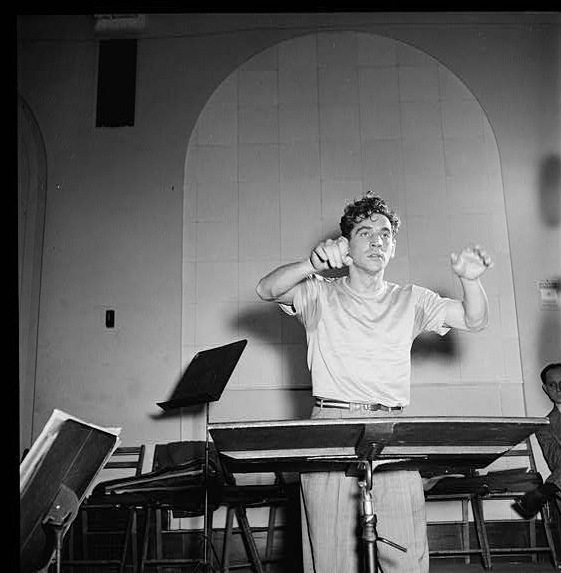


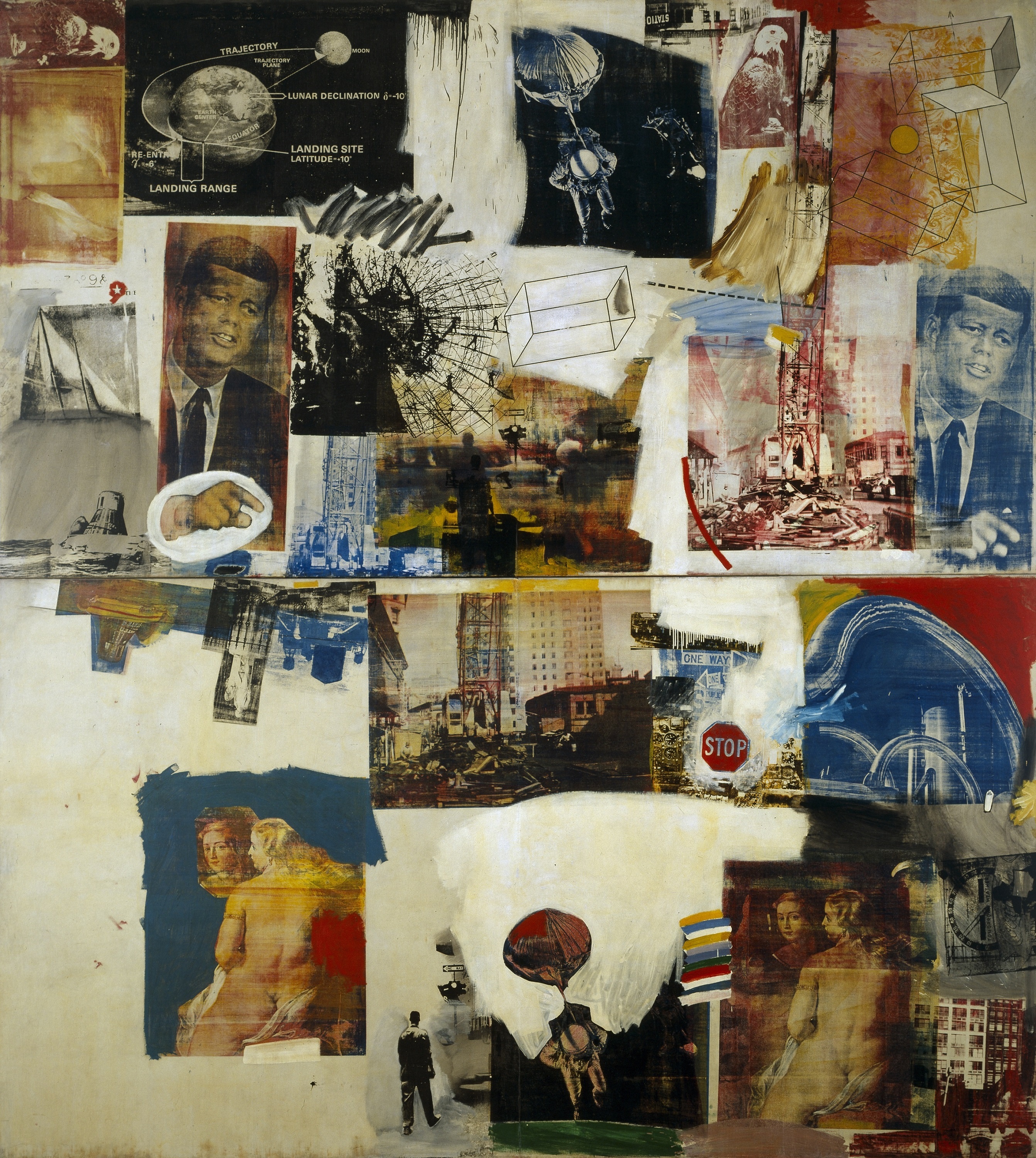
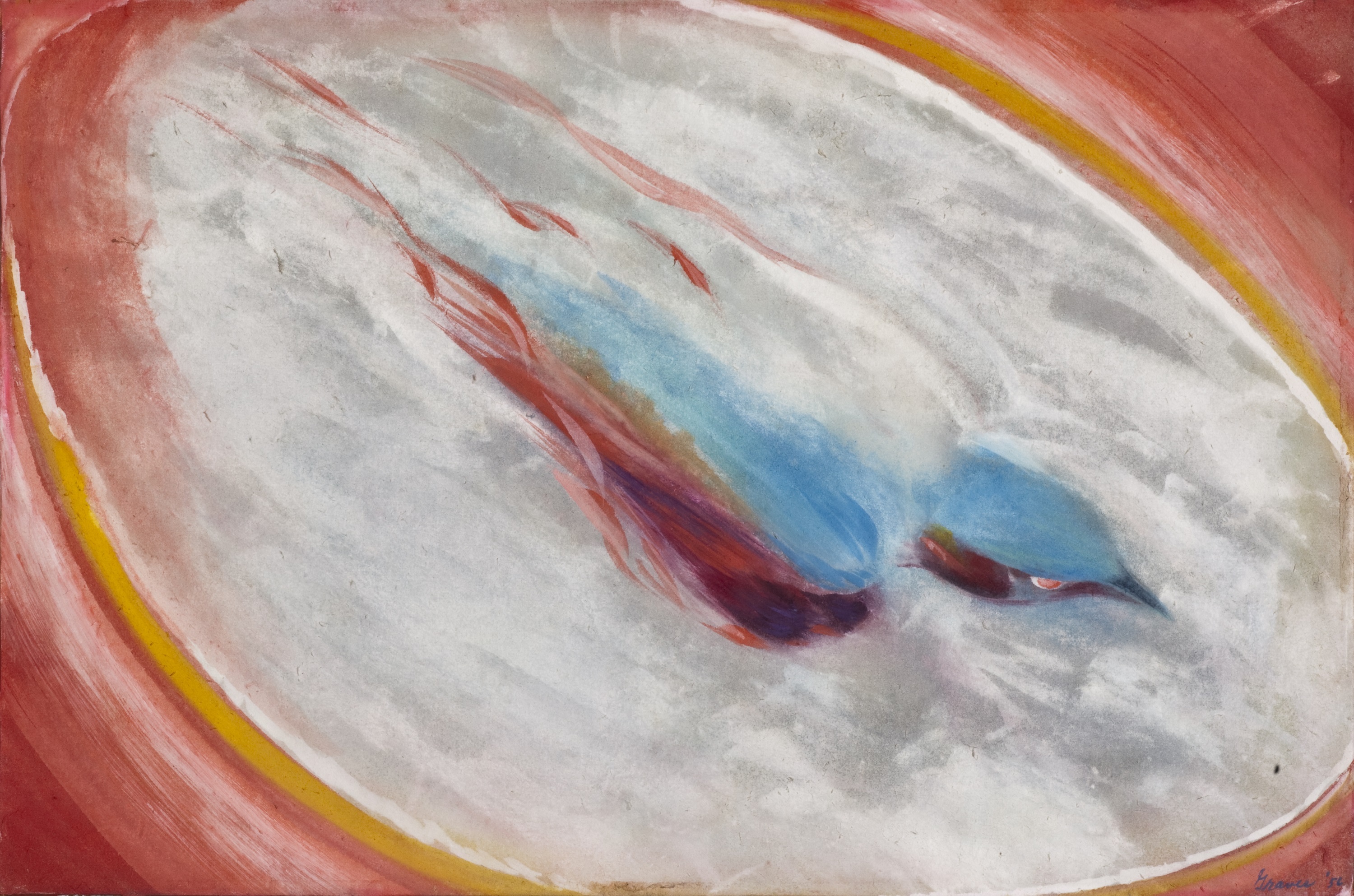
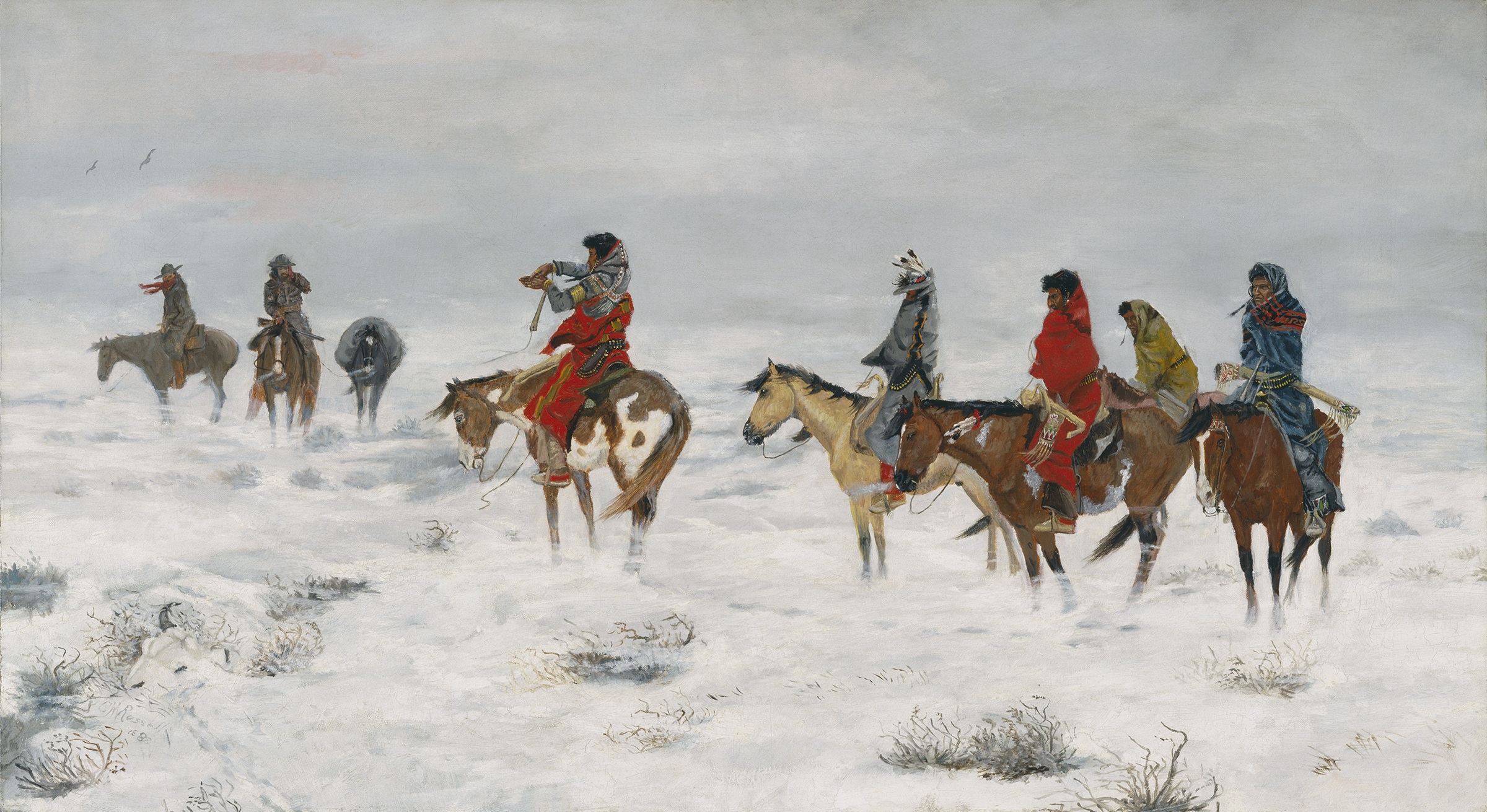

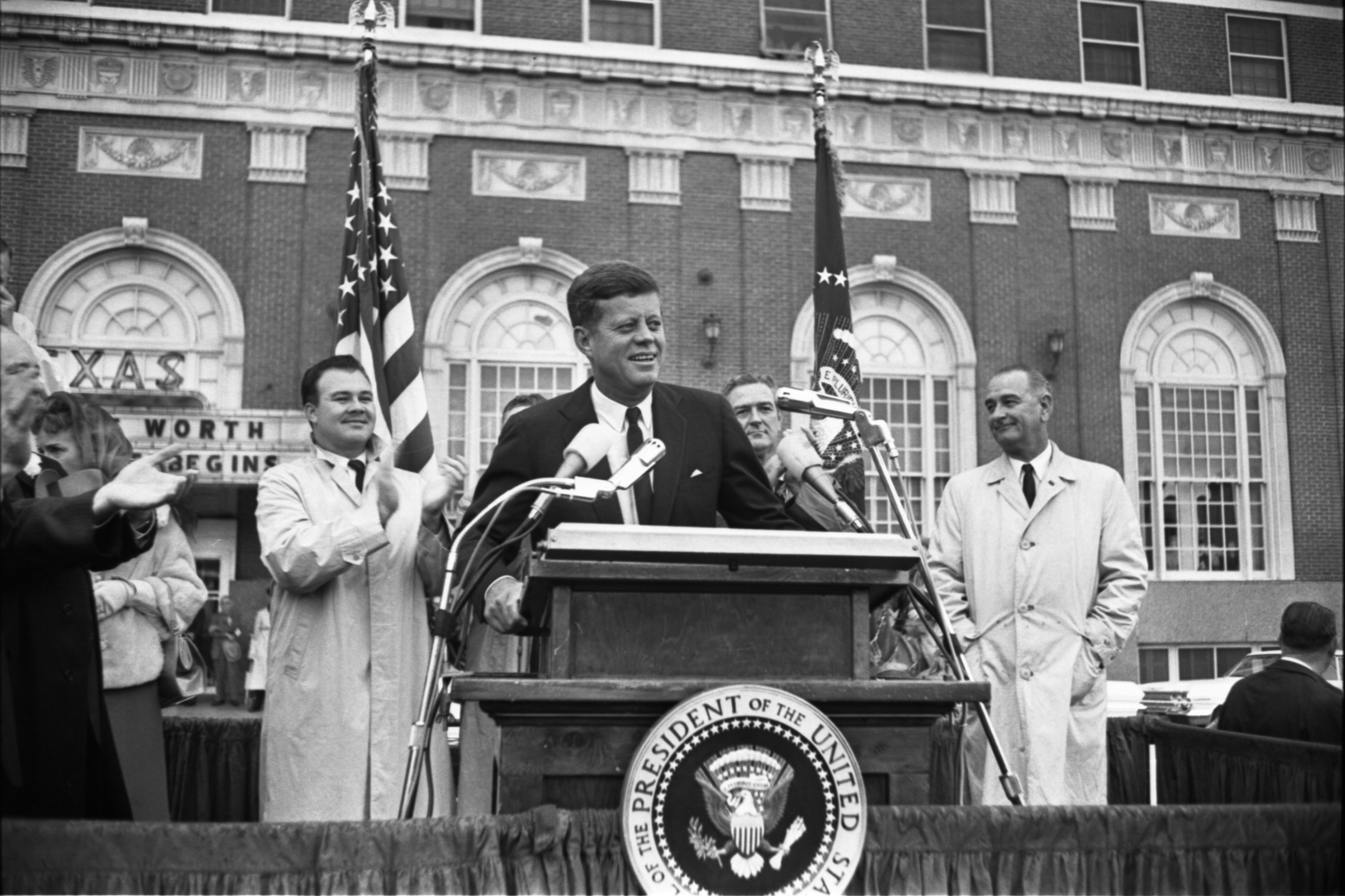

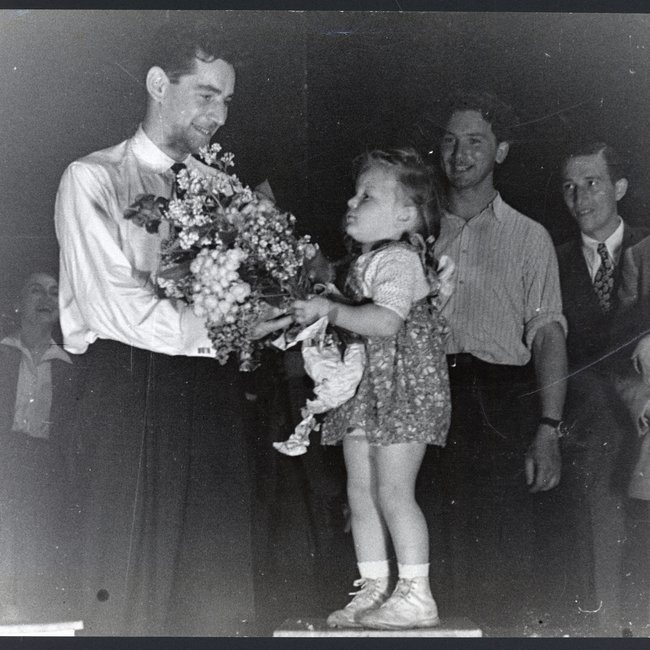


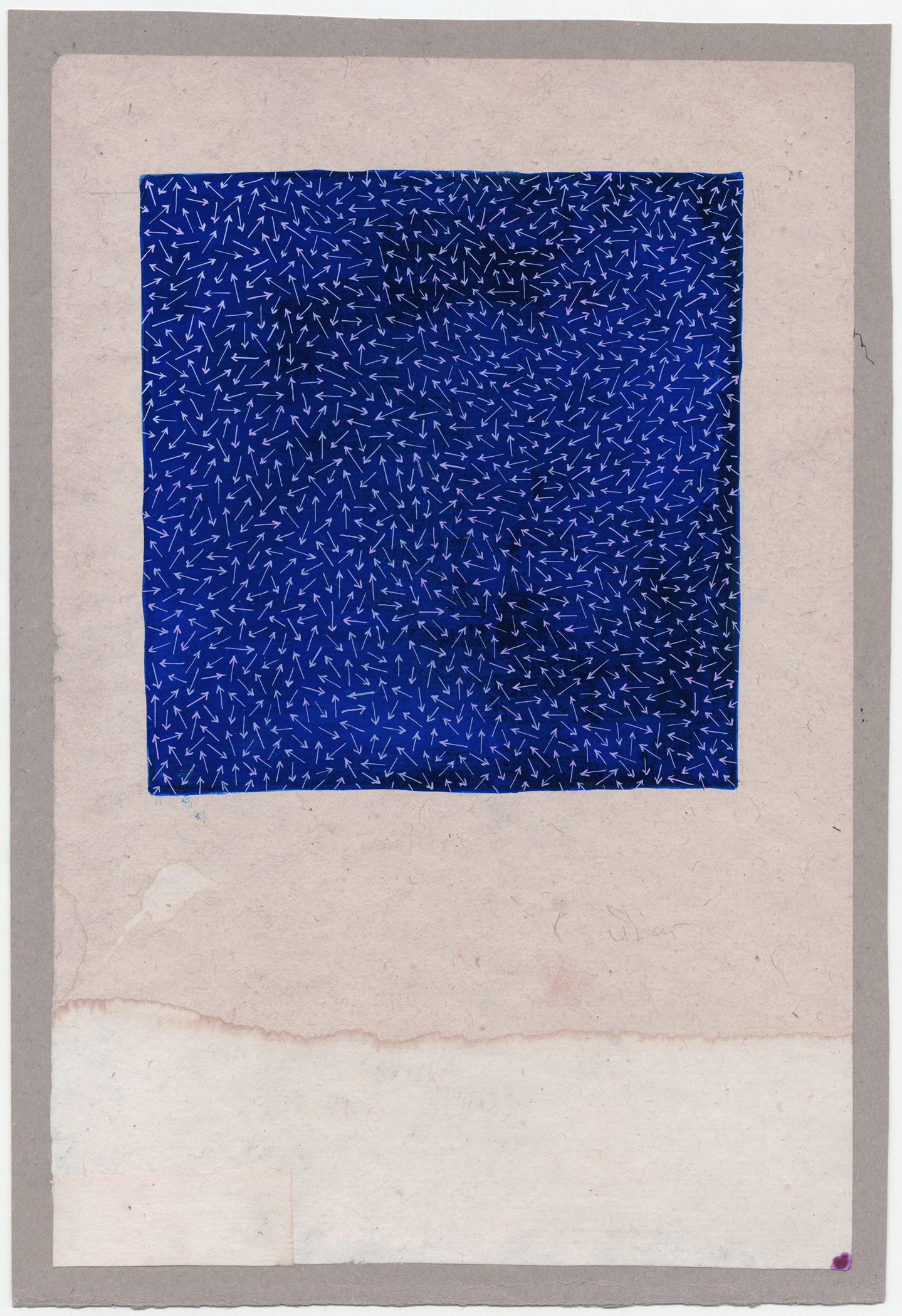

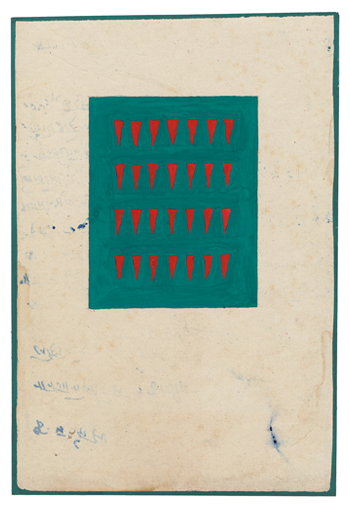
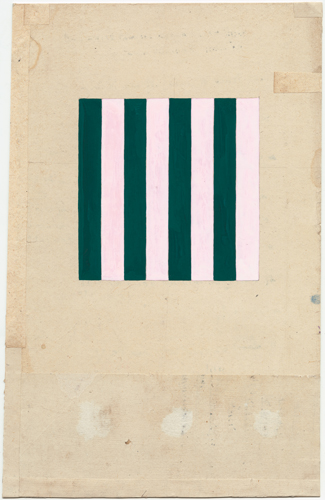





 Robert Leeming