On the Bus

It is interesting, or perhaps it is not interesting, depending on your point of view, how random and unexpected themes can suddenly appear in our day-to-day lives, take root, flower, and die, all within the space of say, 48 hours. All you have to be is bored enough to spot them.

I would like to give you an example. When recently presented with a free day in New York, I decided to try the only mode of public transport that I have not diced with in the city before: the local bus.

Just like all European roads supposedly lead to Rome, all bus routes in New York appear to lead to the Port Authority Bus Terminal, a grey box that sits opposite the HQ of some local rag called the New York Times. To say it is dilapidated, decrepit, and most of all confusing, (the terminal, not the newspaper, although the description could be easily applied to both) would be a considerable understatement. Dimly lit corridors with flashing yellowing fluorescent lights lead to stuck escalators, petrol fumes poison lost pigeons, elderly people disappear down dingy rubbish-strewn stairwells never to be seen again, all while the engine sounds of moving buses echo around, yet remain frustratingly out of sight.

After a struggle I got the bus to New Jersey, chosen because I would need an inter-state ticket, which sounded romantic, but only required a 30-minute trip. The bus was dirty, but the seats were comfy and felt like an overused sofa in your grandma’s house. Opposite me sat a man in brown loafers reading a thick Sunday broadsheet newspaper, which he opened wide and rustled into the aisle with the page corners so close they almost tickled my elbow, an image I thought had left us along with Ronald Reagan and the walkie-talkie.

Hoboken was my chosen destination because it sounded remote and had birthed one of entertainment’s men of the twentieth century – Frank Sinatra. If you are interested, there is a small statue of him on the waterfront leaning jauntily on a lamppost. Old ladies seem to loiter opposite it and try to pick up guys.

It was this vision of Sinatra twined with the bus ride fresh in my memory that really got the bus-theme up and running in my mind. Wasn’t there a rejected Sinatra album cover of him standing in front of a Greyhound bus, wearing a 60-style blue cardigan, white-t-shirt and gold medallion? You know, when he was trying to look cool for the hippie flowerchildren of 1968? And then, as I walked the lonely streets of Sunday-morning Hoboken, more dead celebrity bus-related factoids started to rain into my mind like asteroids from the Planet Stupid. Didn’t Ernest Borgnine (Ernie Borgnine, the guy with the Cheshire Cat grin who won an Oscar for playing a butcher in Marty), didn’t he get divorced and start driving around the US in a bus he called the SunBum? And didn’t they make a documentary about it called Ernie Borgnine on The Bus? Isn’t it on YouTube? Shouldn’t I re-watch it? And so it went on.

Anyways, a couple of days passed by, during which, regrettably, I had less time to think about such things, before the bus theme returned again. This time I was in my hotel room, I could see the top of the Empire State Building illuminated in the distance, and the television was on the blink. The channels were disappearing into a fog of static that seemed to have come from the same place as the guy on the bus with that broadsheet newspaper. Retro-town.

One of the only channels I could get was TCM. Fine by me. I love old movies. And what were they showing? Frank Capra’s It Happened One Night, with Claudette Colbert and Clark Gable – the ultimate bus movie. The gold standard. And it was just at the bit, that life-affirming wonderful bit, when everyone on that seemingly endless bus ride from Florida to New York, which makes the centre of the movie, start to sing:

The Man on The Flying Trapeze.

Whoa! He’d fly through the air with the greatest of ease

A daring young man on the flying trapeze

His movements were graceful, all girls he could please

And my love he’s stolen away.

Somewhere amid the verses an initially resistant Claudette gives in to the charms of Gable and they fall in love. Just like Steve Martin and John Candy fall in love in their own kind of way, during their own interminable journey across America in the hopes of making it home in time for Thanksgiving dinner in Planes, Trains and Automobiles. Why did that come into my mind? Because there’s a bus scene of course! Somewhere in the middle of the movie, Neal (Steve) and Del (John) go on a bus journey to St. Louis, and isn’t there a sing-song? Yes! Martin tries to lead the passengers in a rarefied version of Three Coins in a Fountain, but it falls flat, prompting everyman Candy to jump into a rambunctious version of The Flintstones theme.

Surely the singing on the bus scene in Planes, Trains and Automobiles was influenced by the singing on the bus scene in It Happened One Night? Surely? I have no idea. If you know the answer, send it to me on a postcard by ways of Stupid-ville, London. I’m really desperate to know.

So, after all these somewhat strange occurrences, on the flight back, when flicking through all the films I didn’t want to watch on the seatback television, what should I spot but a new documentary all about the life of Frank Capra, and it was full of talking heads, naturally talking about how wonderful the bus-singing scene was.

I looked from side-to-side and wondered if it was worth trying to get a sing-a-along going with my fellow passengers. The Wheels on the Bus perhaps? The Bus Driver’s Prayer? How about a song about Rosa Parks? Or Blakey and Stan Butler? Fearing I might get shot, I decided to stay quiet and ride the sky-bus all the way home with Claudette Colbert and Clark Gable.
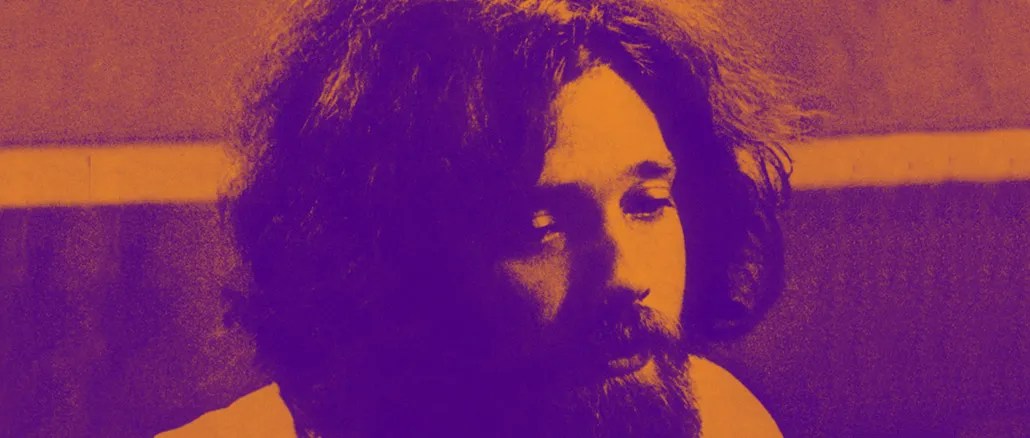
Looking Back On My Interview With Bill Fay

In 2010, Bill Fay was considered to be – within the narrow confines of the UK’s folk-rock scene – a reclusive musical enigma of almost Salingeresque stature.

In the early 1970s he recorded two albums and, after being promptly dropped by his label, he disappeared into obscurity in north London.

The two records that he left behind, over time, presumably through accidental dusty record shop discoveries and later CD reissues, began to build a small army of followers.

His first record, the eponymously titled ‘Bill Fay’, with its hymnic devotional songs to nature, and its darker follow-up, ‘Time of the Last Persecution’, have a style entirely to themselves.

In 2010, Bill commenced what would become an unlikely comeback, by releasing a series of home recorded demos that he had completed during his years in seclusion.

The album was released by Coptic Cat, a label that was founded by David Tibet of Current 93 fame. 

Spying an opportunity to get a chance to speak to the man himself, and solve one or two mysteries in the process, I got in touch with David to request an interview with Bill.

I was, to say the least, not hopeful of success. But, a reply did come, as well as a request for questions with the caveat that there were no assurances that they would be answered.

Luckily, Bill liked the questions and called me to discuss them. The results of the conversation became an article that I wrote for Flux Magazine, which was at the time a print publication based in Manchester.

When I emailed Bill to tell him that the article was done and the magazine was printed, he told me that he would go to his local WH Smiths to see if he could find a copy, which is a part of the story that makes 2010 sound longer ago than it really was.

Bill’s music is timeless though and the adulation that he received, including an article in the New York Times, for the two albums he released after 2010, with American record producer Joshua Henry, was richly deserved.

Looking back on my interview with Bill, eleven years later, many of his answers seem to me to be rich in a wisdom that is hard won. I have included a few answers from the interview below: 

Your music has always been about returning to nature. In Garden Song, you sing about planting yourself in the garden. Are beauty and nature and our relationship with them things that still inspire you?

For me, Garden Song was the beginning of seeking something deeper. I came to feel that we were largely in our day-to-day lives asleep to a greater reality. I believed there was something to find out, but more than that, I felt strongly that you could actually find out, which was a big step for me.

I felt that we as human beings had named things like a tree or a butterfly and in the act of naming them, we had explained them away. I came to feel that we were living in one sense within the restrictions of our own heads.

So, I started to pay more attention to nature. I didn’t run to the mountains or anything, I mean that I would sit on the top deck of a double-decker bus and look at things, trees, for example. Part of your head is saying ‘why are you doing this, it’s only a tree’, but I kept looking, to try and understand more and get outside of my own head.

How did you channel this thought process into your song writing?

What used to happen back then and to some degree still happens, is that a song is a vehicle, a means of expressing, where I’m at inside.

Just as I sing in Garden Song, ‘I’ll wait for the rain to anoint me and the frost to awaken my soul.‘ It was that waking up that was important to me, connecting with the real world around us of living things. I did come to feel an enormous strangeness, the connection that I began to feel with the living world was very vivid.

Aside from nature, I also get a sense that some of your music is inspired by the wartime generation, your parent’s generation and the wars that they fought?

I have always been grounded in the 1914 generation, the generation that fought the First World War. I remember my old Aunt May and her sister looking after my Uncle Will after he was poisoned by mustard gas in the trenches. He used to just sit there all day in a chair and they used to look after him. My song ‘Sing Us One of Your Songs May‘ is loosely based on that.

May would sing the old songs like ‘Sunshine Of Your Smile’ and I would play the piano to accompany her singing. She never married and May and her sister went through life looking after their mum and dad and their brother. It was another generation, which was just not confronted with the same things I was in the 1960’s but I felt amazingly linked to them.

It seems to me that your songs are written more from a spiritual angle than a political one, although you came of age in an era when political and protest songs were very much in vogue. Do you avoid politics?

I suppose my songs can be political, sometimes, just think of The Sun is Bored on my first record and ‘the minister for good taste’ that I sing about. There is a political aspect sometimes, but I don’t often find modern politicians inspiring.

I am sure that there are good politicians though. I do remember fondly the old Labour politicians, like Manny Shinwell, and people of his ilk, who said they wanted to bring about heaven on Earth, but it was as much as they could do to prevent hell on Earth. I could say a lot politically, I have a lot of political anger, but I do understand that a lot of the issues that politicians deal with are very complex.

Your third album Tomorrow Tomorrow and Tomorrow ends with the line ‘Nothing has changed, only me, the world’s still the same, but I’m not the same.‘ Are you still changing? Still searching? Or have you reached a level of contentment?

I don’t think that the level of contentment you speak of exists. I don’t think you can be content when there is so much wrong in the world. I do think that you have to strive to keep awake to all the things I was talking about earlier. Nature will always inspire me. It’s great just to see a robin sometimes! There are such miraculous little things in the world.

In day-to-day life you can quite easily become not as connected as you have been in the past, so there is always a feeling within me that I need to stay awake to the full picture, no matter what the distractions.